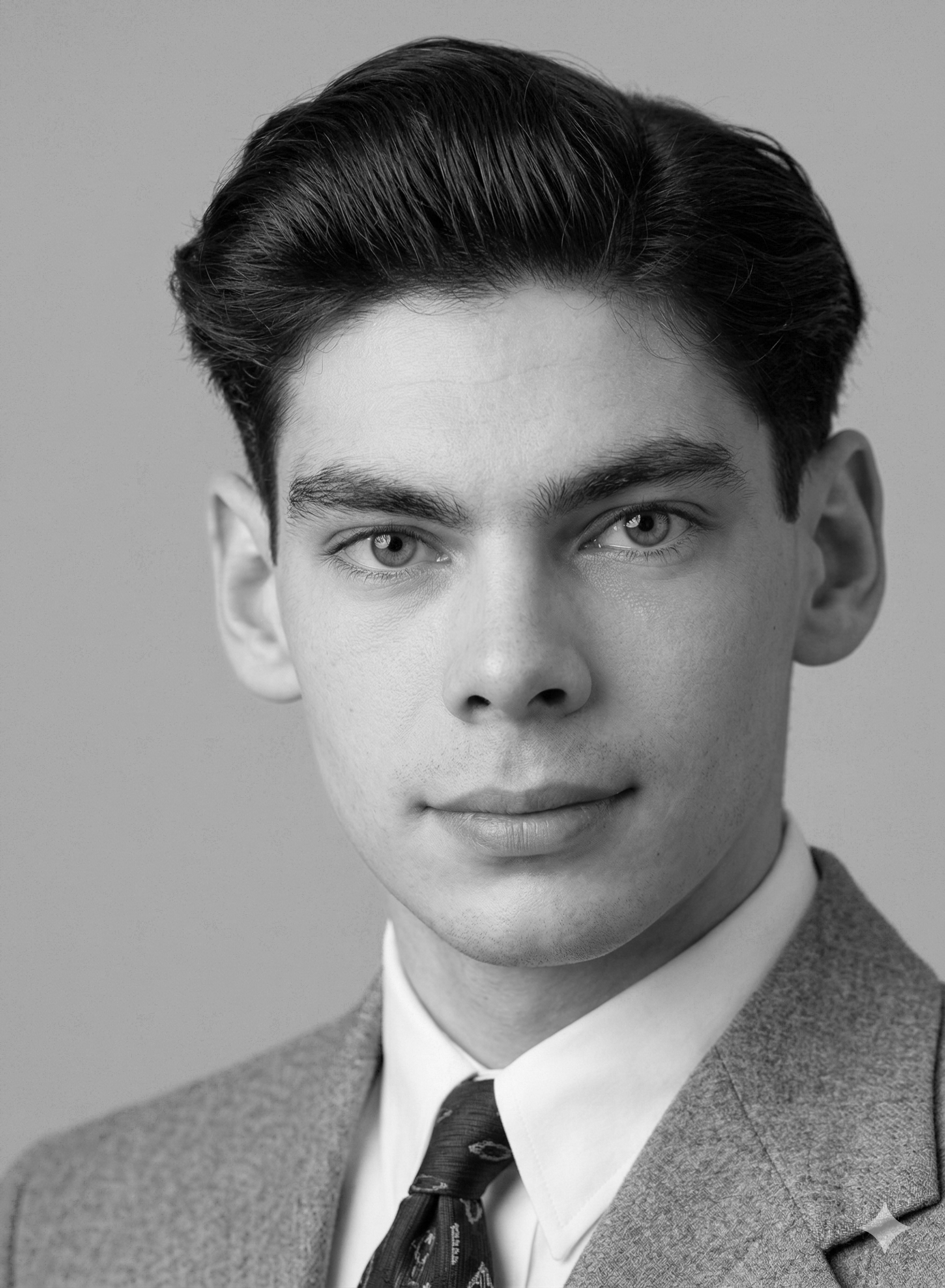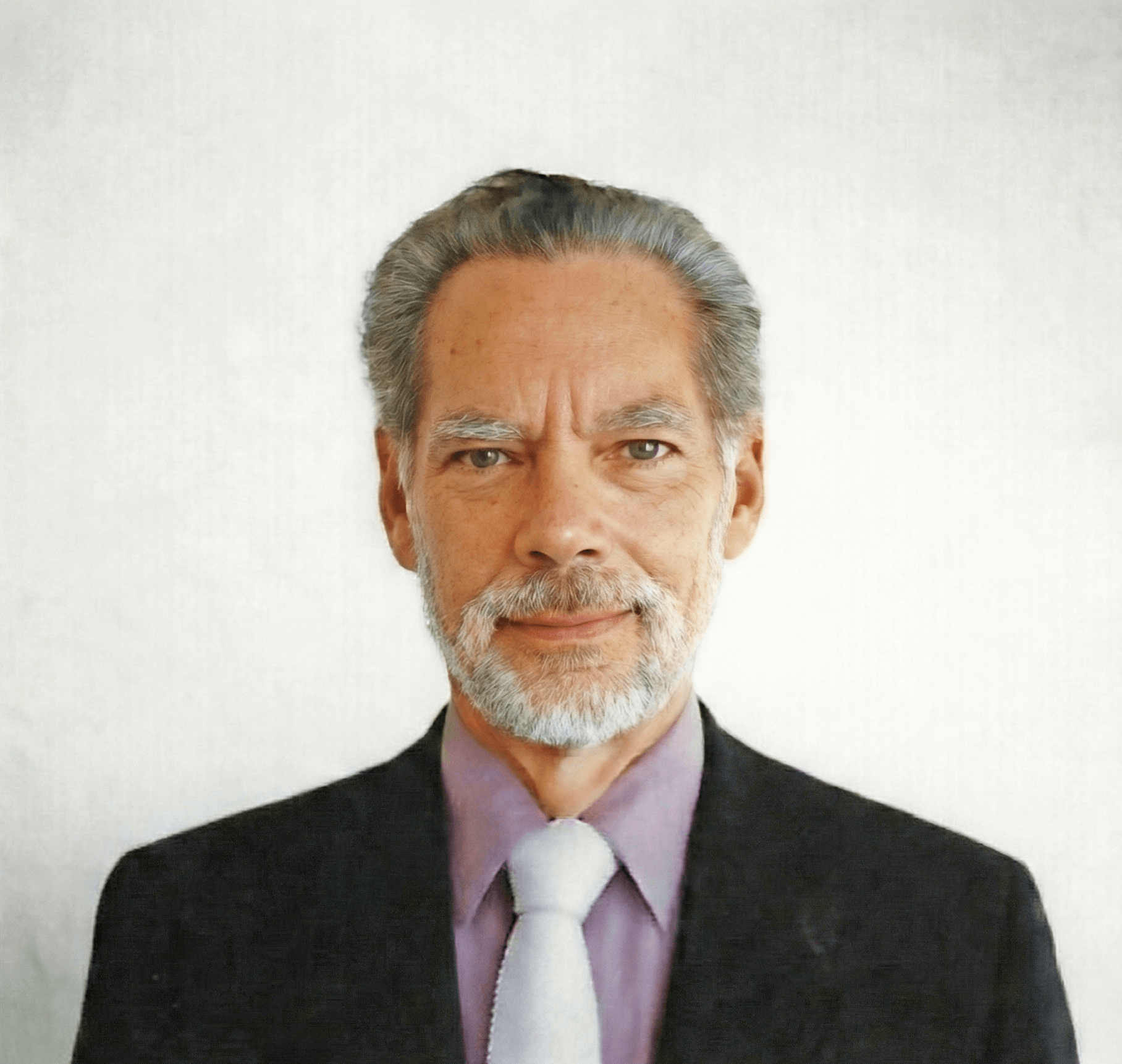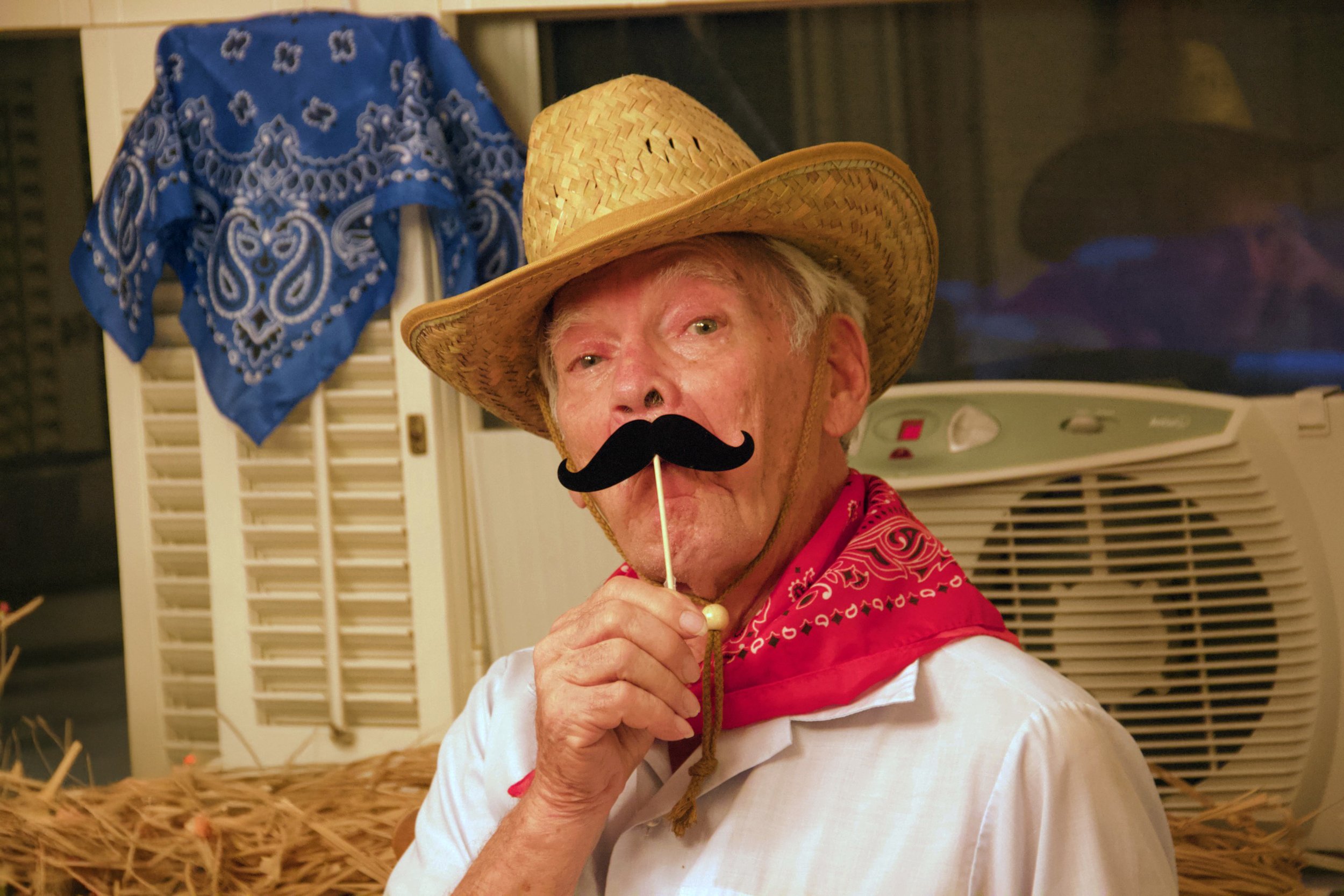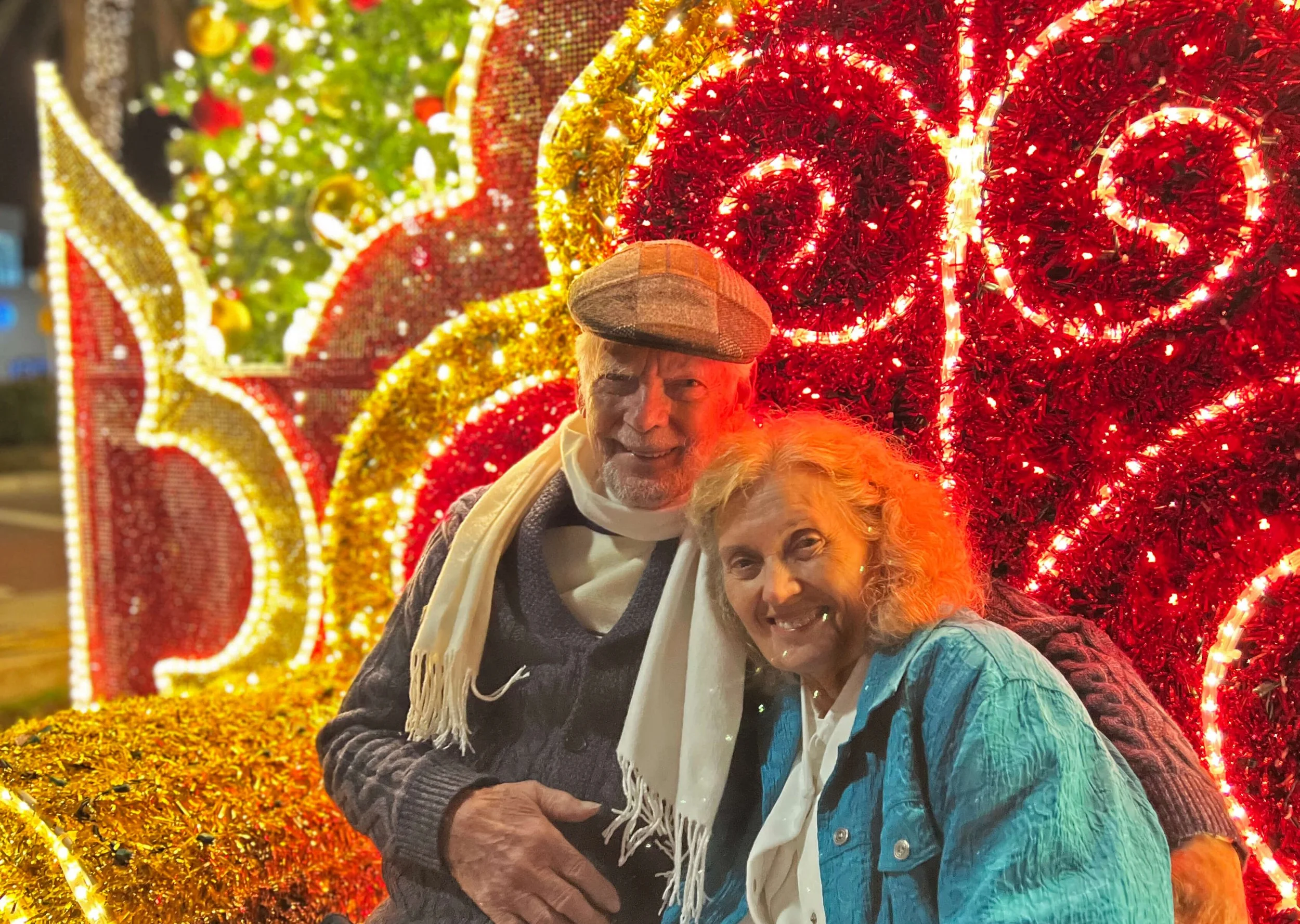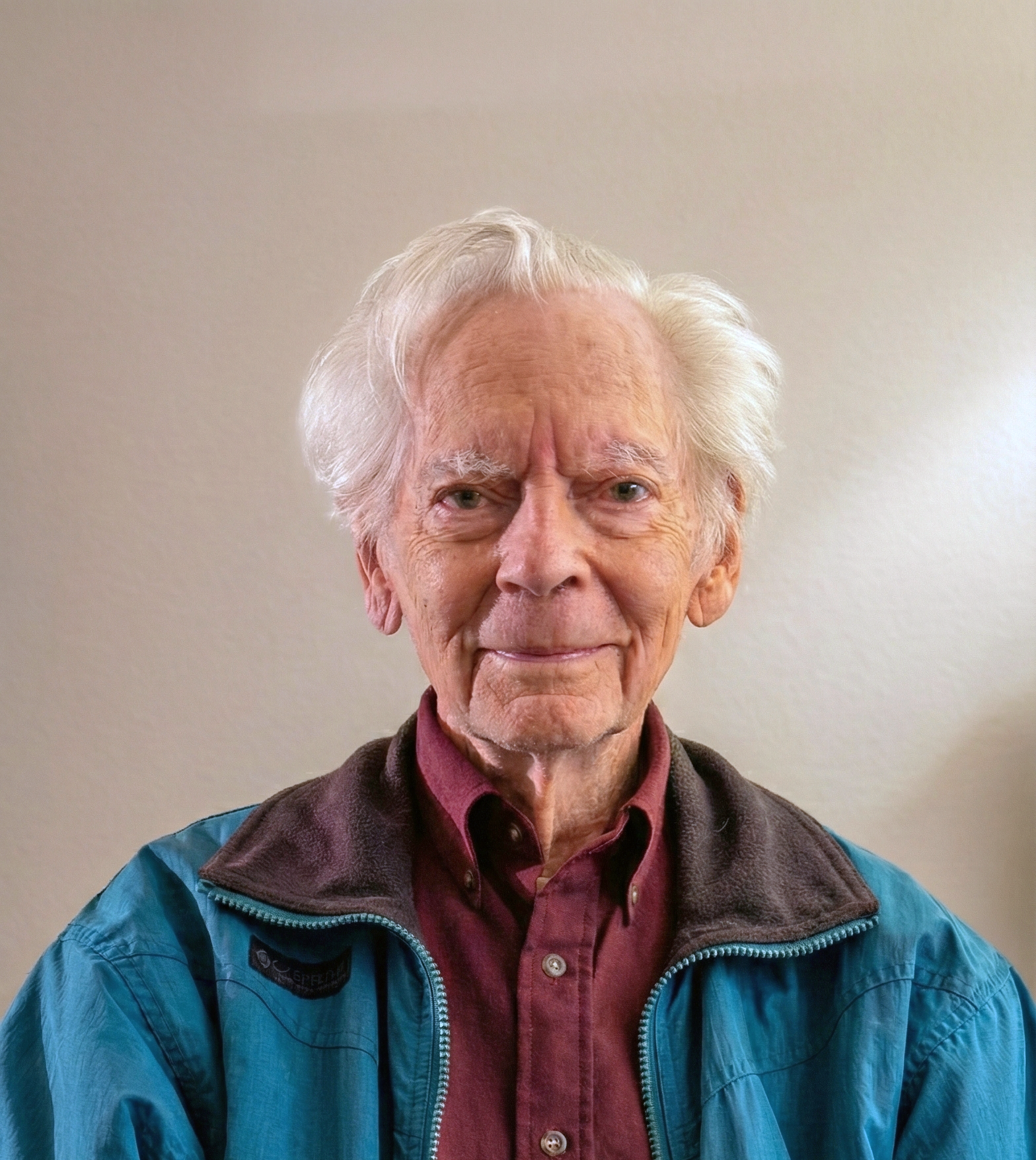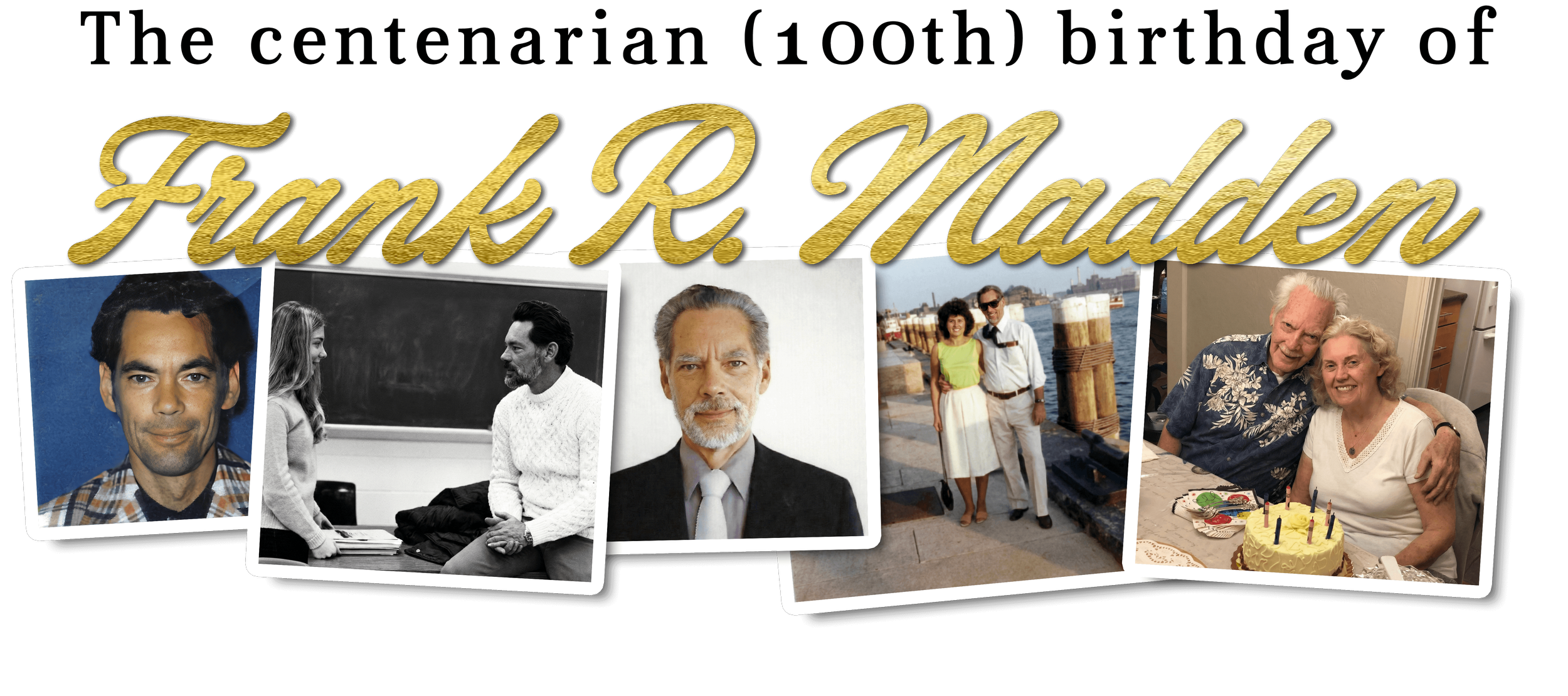
Frank R. Madden, EdD celebrated his centenarian birthday on April 27, 2026, but his 100th celebration continues all year long through April 2027. Details about Frank’s life, mailing address for gifts and letters, photos for publication, and all other pertinent details can be found here.
Frank’s Biography Mailing Address Special Thanks Photos of Frank
Frank’s Biography
1926–1943: Forged in the Depression
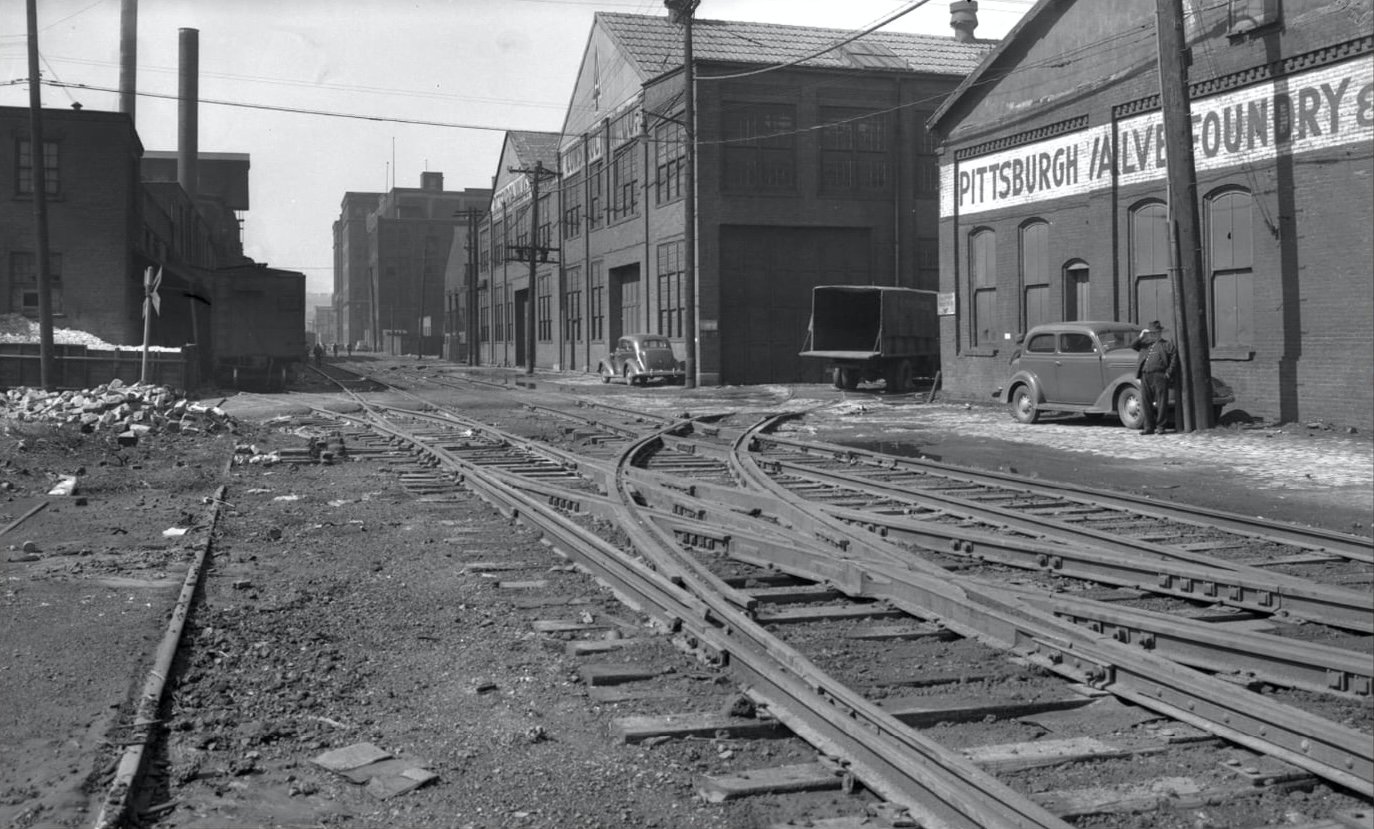
Born on April 27, 1926, in Pennsylvania, Frank’s character was carved out of the hardscrabble reality of the Great Depression. Raised by a single mother who fought tirelessly to provide for them, Frank learned early that survival was a daily contest. On the streets of Pittsburgh—a city then choked by the smog of steel mills and economic desperation—he learned to fight, both literally and figuratively.
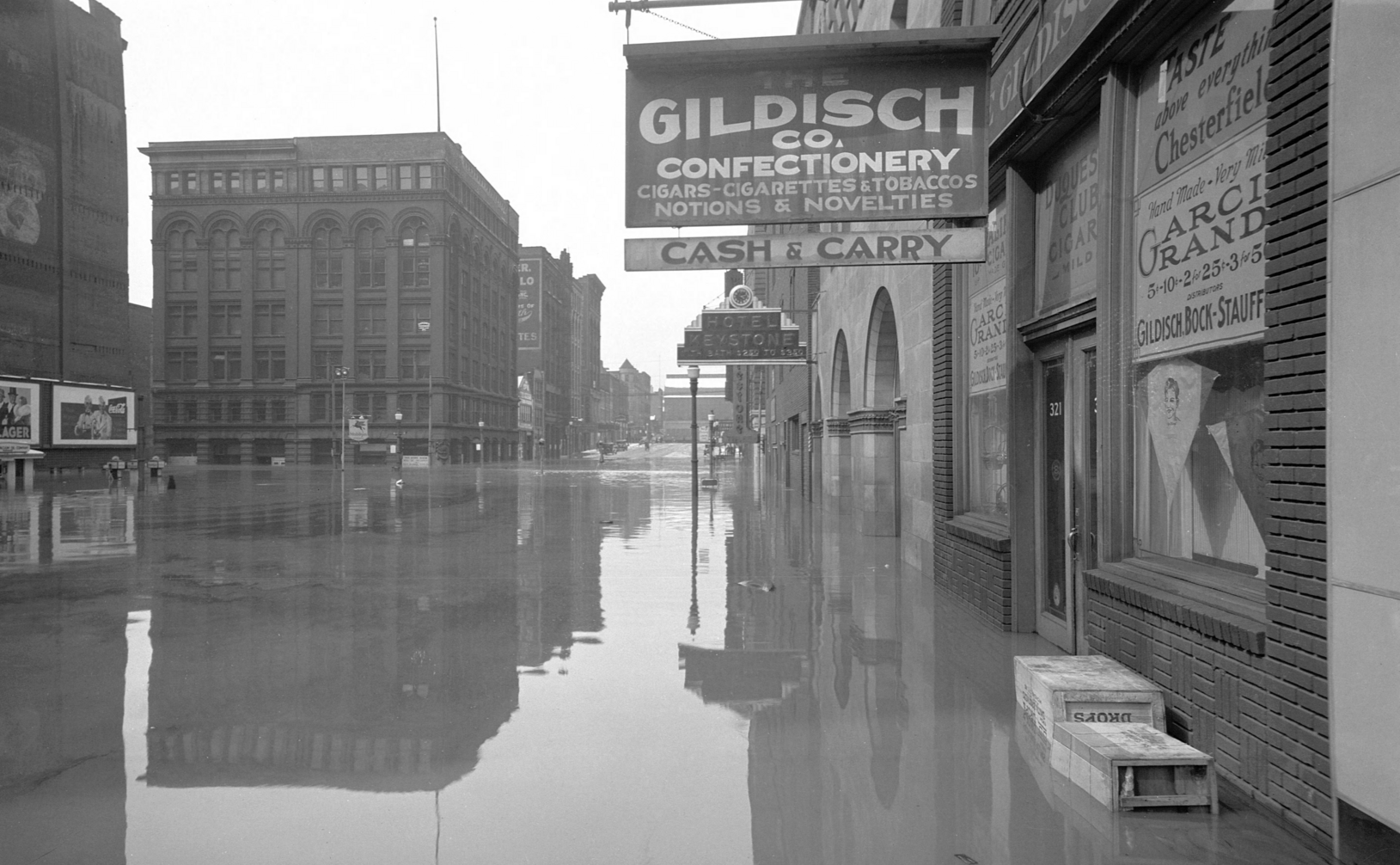
He also witnessed firsthand one of the most impactful events in Pittsburgh’s history, The Great St. Patrick’s Day Flood of 1936. While the rising waters of the Allegheny and Monongahela rivers didn't reach his doorstep, the scale of the disaster left a permanent mark on his memory. He recalls the eerie transformation of the city—downtown was a restricted zone of submerged streets, and he distinctly remembers traveling down toward the riverbanks to see the wreckage of boats that had been tossed like toys and washed high up onto the shore.
But this experience simply steeled him and his unwavering tenacity was evident even in grammar school. Each day involved a two-mile trek to Daniel Webster Grammar School, yet Frank would still wake up before dawn, ensuring he had enough time to play softball before the bell rang. He was a bright student, but his restless spirit often chafed against the confinement of the classroom. When his third-grade teacher asked for his opinion on school, Frank offered a candid assessment: “I like it, but it takes up too much of my time.”
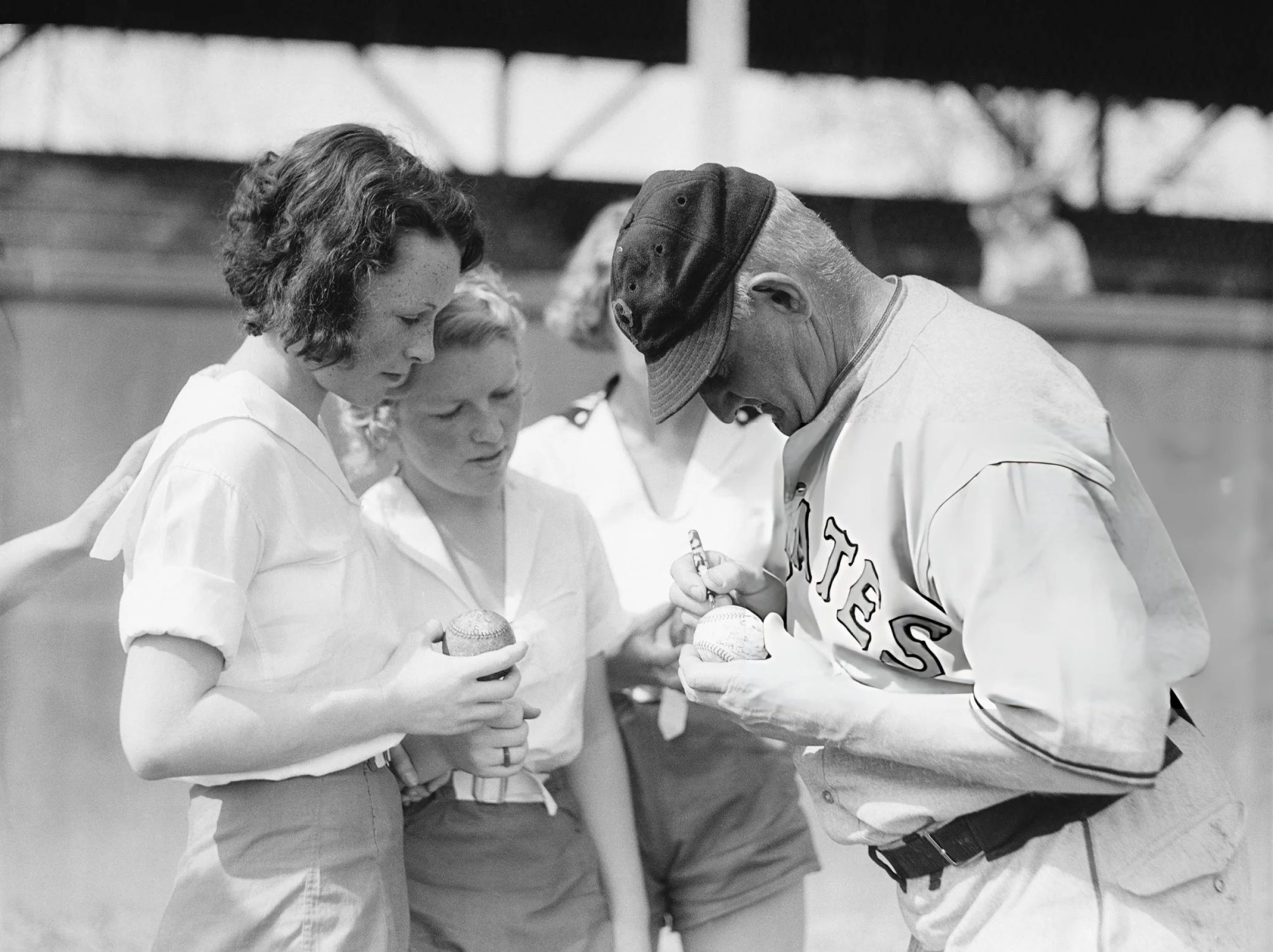
Beyond the schoolyard, Frank’s love for the game found a larger stage at Forbes Field. Around the age of nine, Frank became an early member of the Pittsburgh Pirates' Knot Hole Gang, catching the wave just as the youth promotion was surging in popularity across the country. For kids growing up in the Depression, the program was a rare and thrilling ticket to see professional baseball up close, and Frank made the absolute most of it. He spent those afternoons roaming the stands and meeting players, but his dedication didn't stop at the ballpark gates. Knowing the players' routines, Frank would stake out the elegant Hotel Schenley to hunt for autographs, waiting to catch his heroes off the field. One encounter that left a lasting impression was with the towering 6-foot-6 pitcher "Big Jim" Weaver, who hurled for the Pirates during the late 1930s. Looking up at a major league giant like Weaver only cemented Frank's own ambitions.
At Latimer Junior High School, his love of sports continued in the form of baseball and by the time he reached Allegheny High School, his athletic drive had only intensified. Frank balanced his studies with playing for three different sandlot teams, including the Taylor Athletic Club and Fine View Independent, honing his skills on the rough, makeshift fields of the city. He was also known to his fellow classmates as being an accomplished model airplane builder.
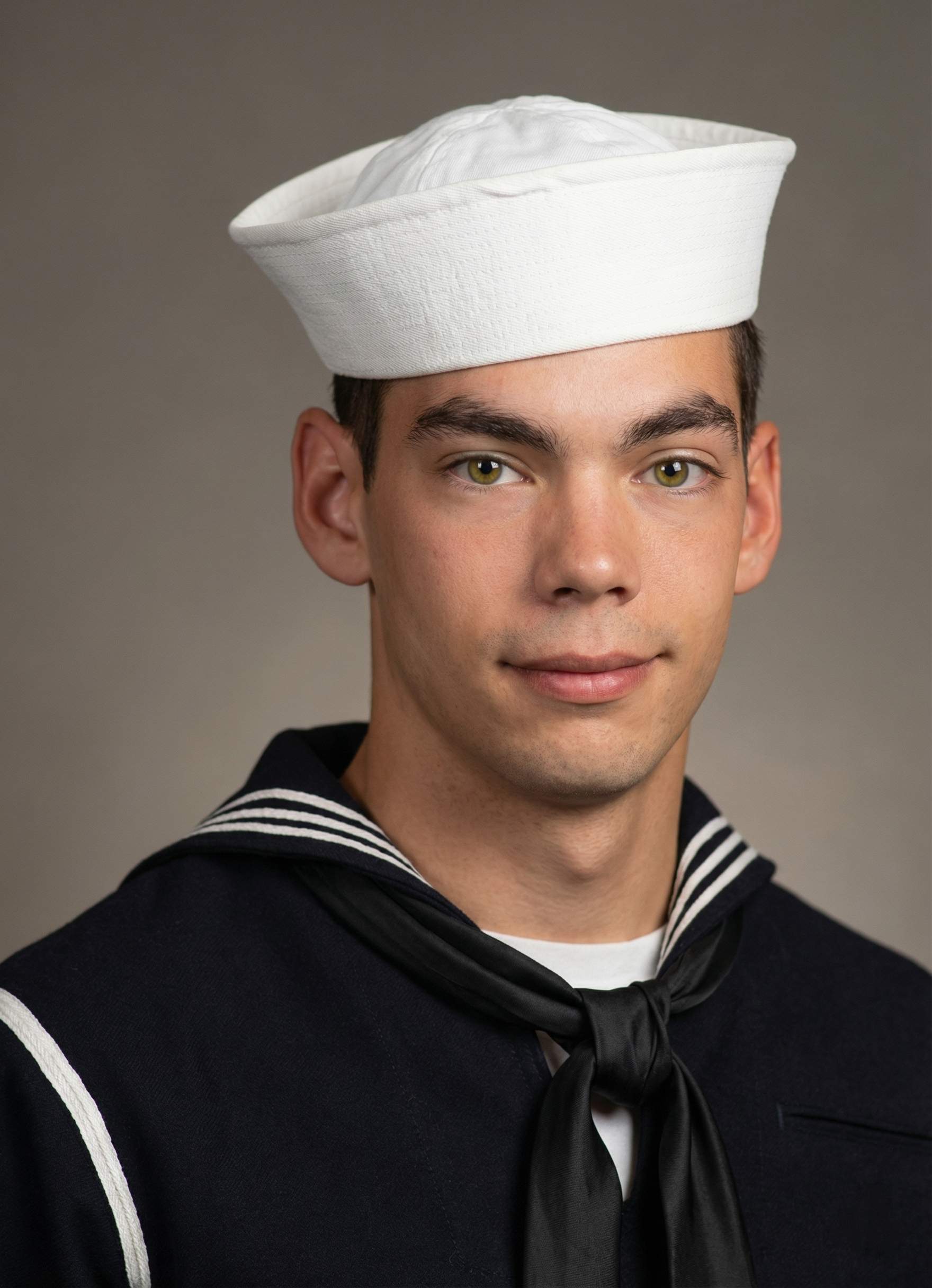
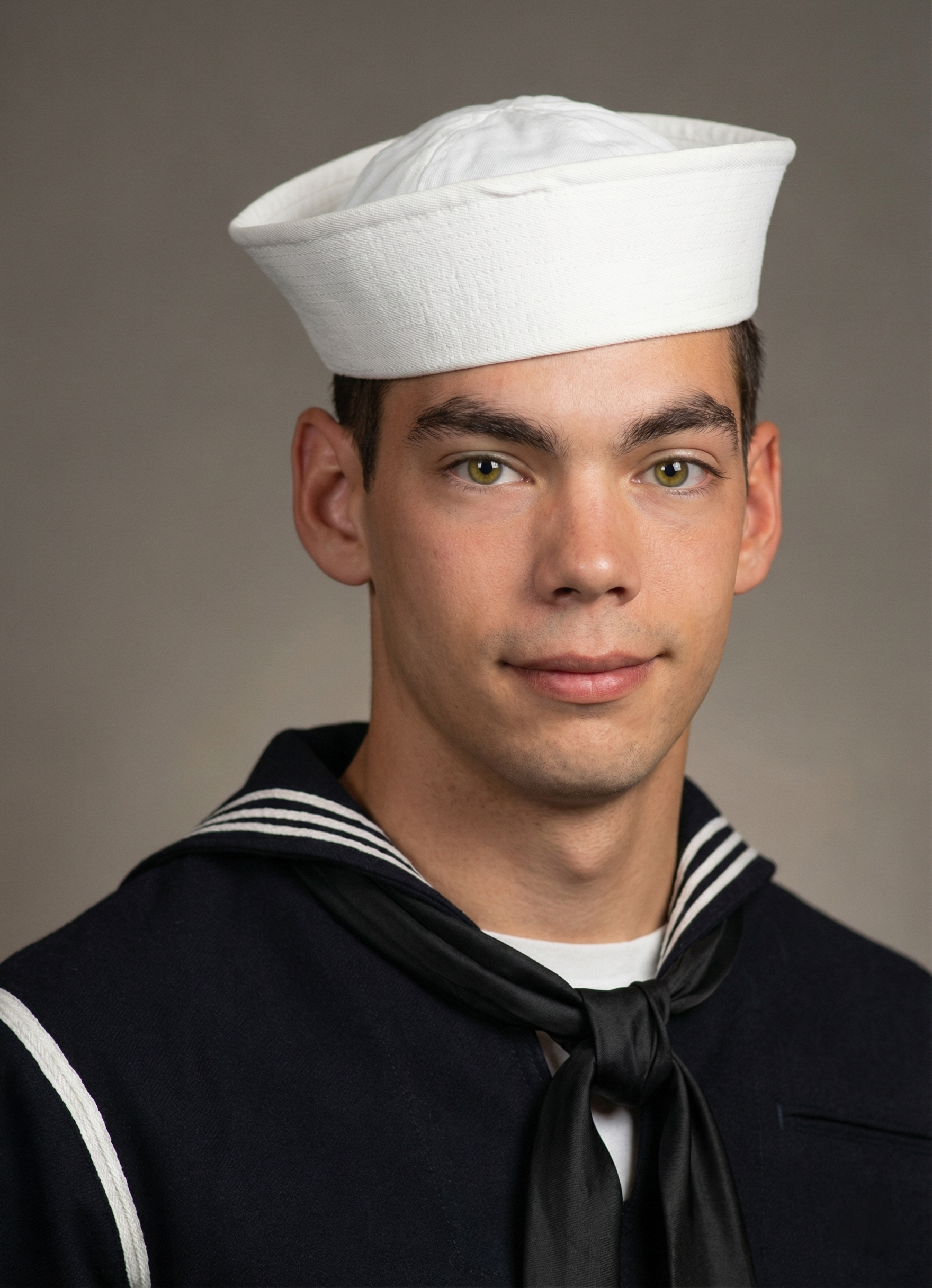
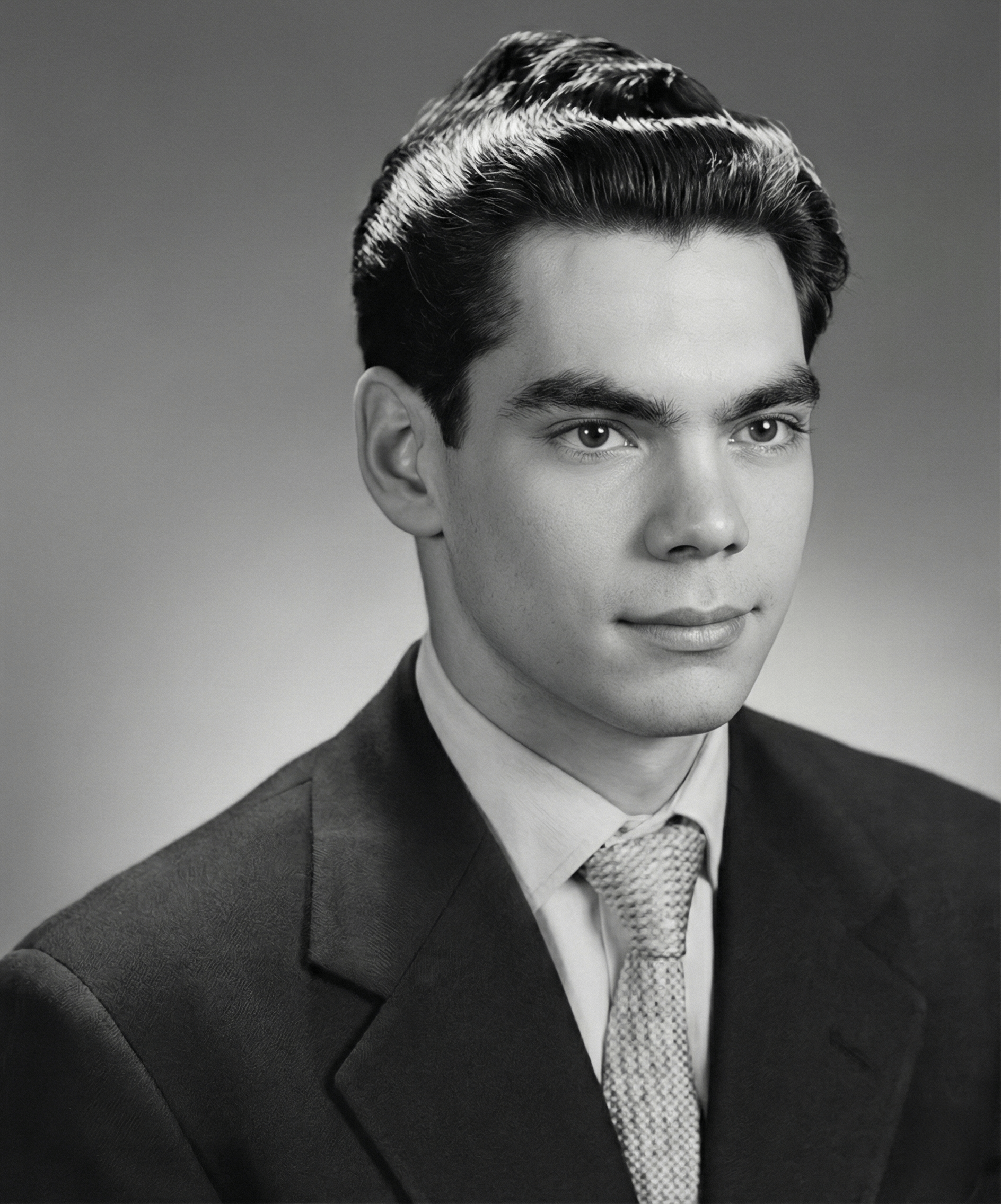
Frank in his Navy uniform in 1944
While sports provided an outlet, Frank’s high school years were primarily defined by a grueling work schedule that mirrored the industrial rhythm of Pittsburgh. His typical weekday was a marathon of discipline: after attending classes from 9 AM to 1 PM, he headed straight to the Pennsylvania Railroad yards. There, he spent his afternoons performing the backbreaking labor of loading steel onto box cars.
His day, however, didn't end at the tracks. His evenings were spent working at McCann’s Grocery Store, a commitment that extended through the weekends. On Saturdays and Sundays, Frank remained at McCann’s, packing orders and navigating a delivery truck through the city to ensure local families had their food. This relentless pace left little room for rest, but it forged the ironclad reliability that would define his later career.
As America’s part in the Second World War heated up, Frank’s focus shifted from the sandlot to the service. Determined to join the fight, he had to accelerate his education to qualify for the Navy's V-5 program. With the blessing of his teachers, he doubled up on his subjects, compressing his coursework to graduate four months early and report for active duty.
1943–1946: The Pacific Theater
As World War II engulfed the globe, Frank answered the call. At just 17 ½, he enlisted in the Navy’s V-5 Program on December 20, 1943. This elite initiative was designed to churn out Naval Aviators, but because it required a college education, the Navy sent Frank first to Bethany College and then to the University of Virginia.

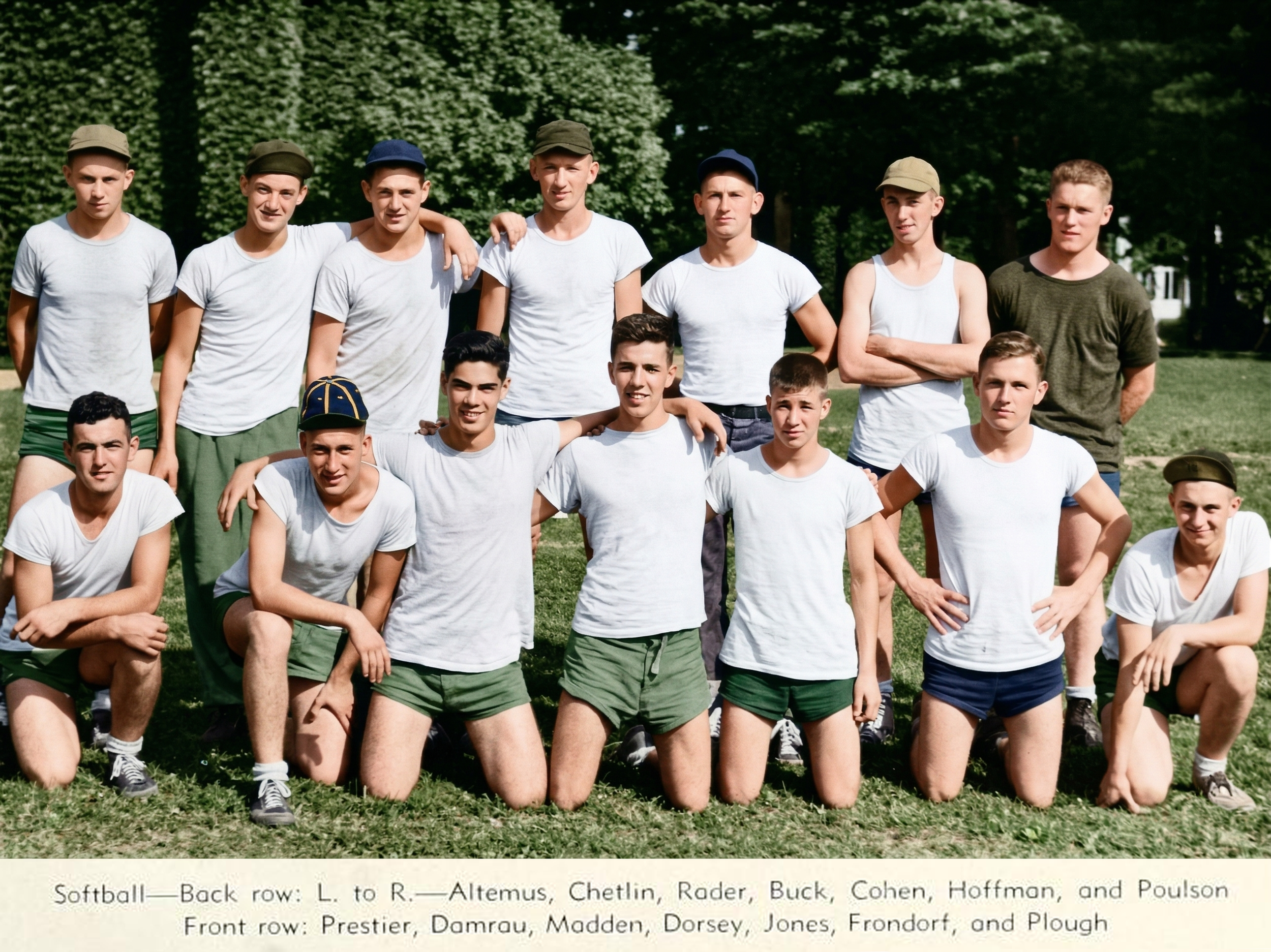
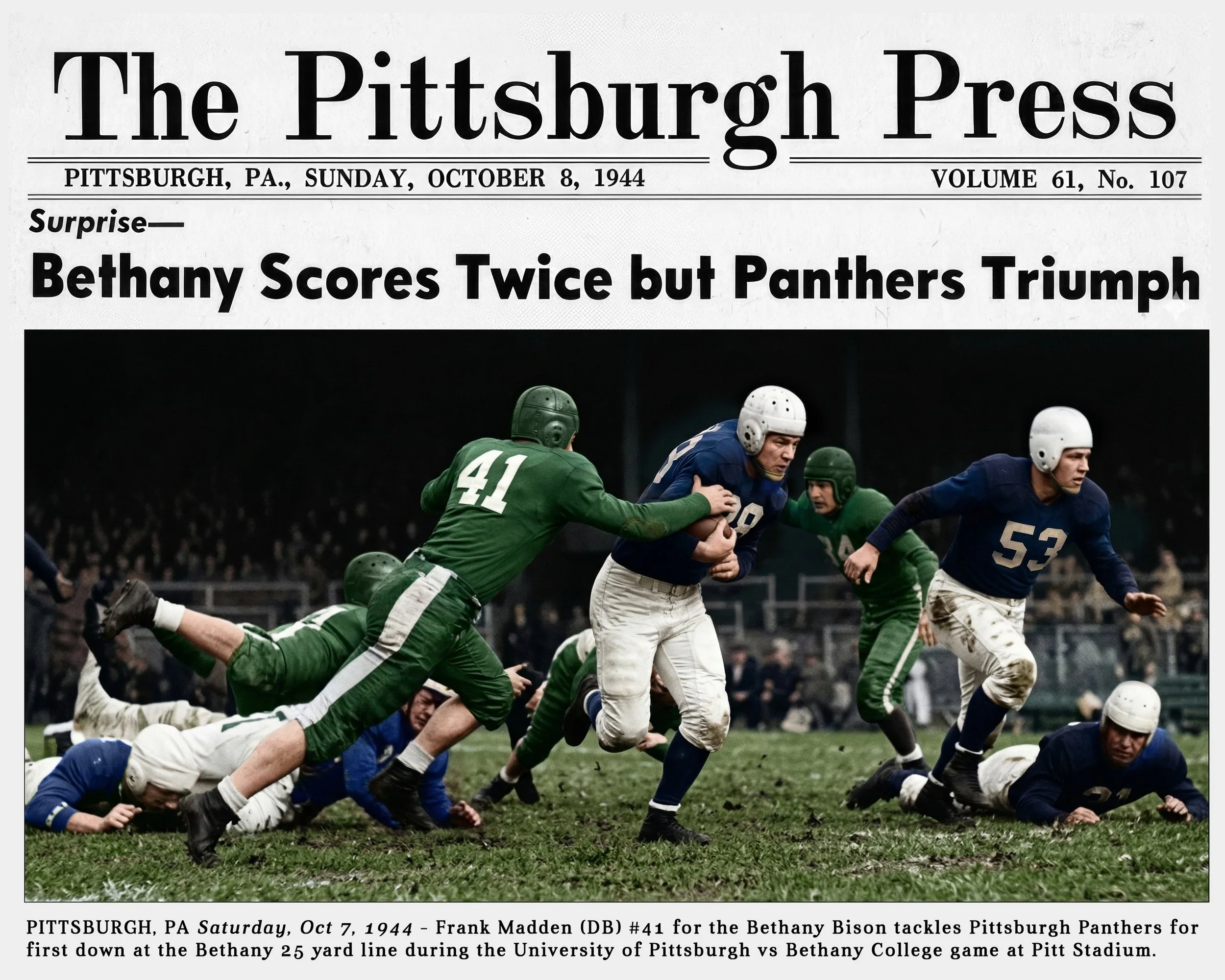
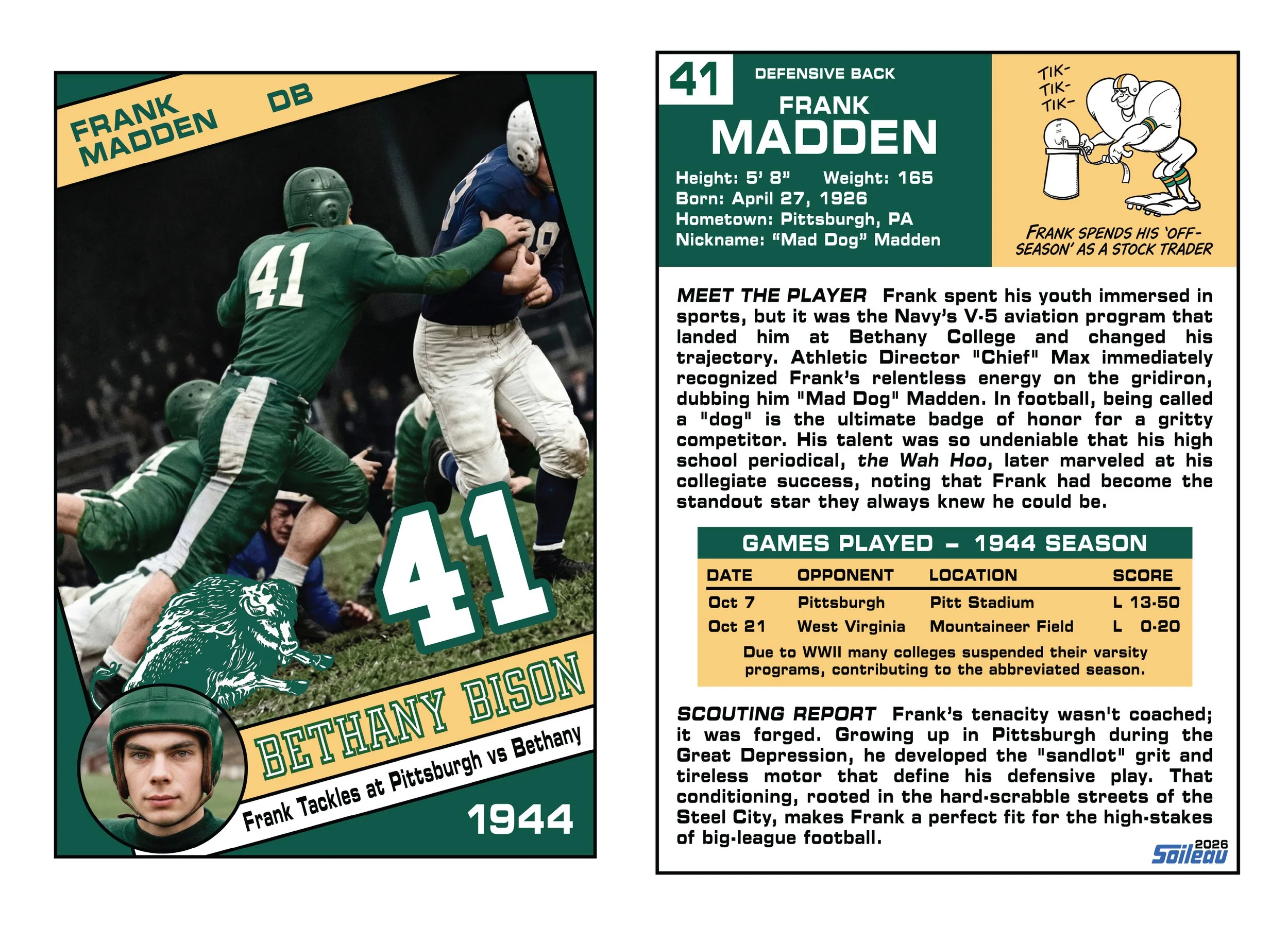
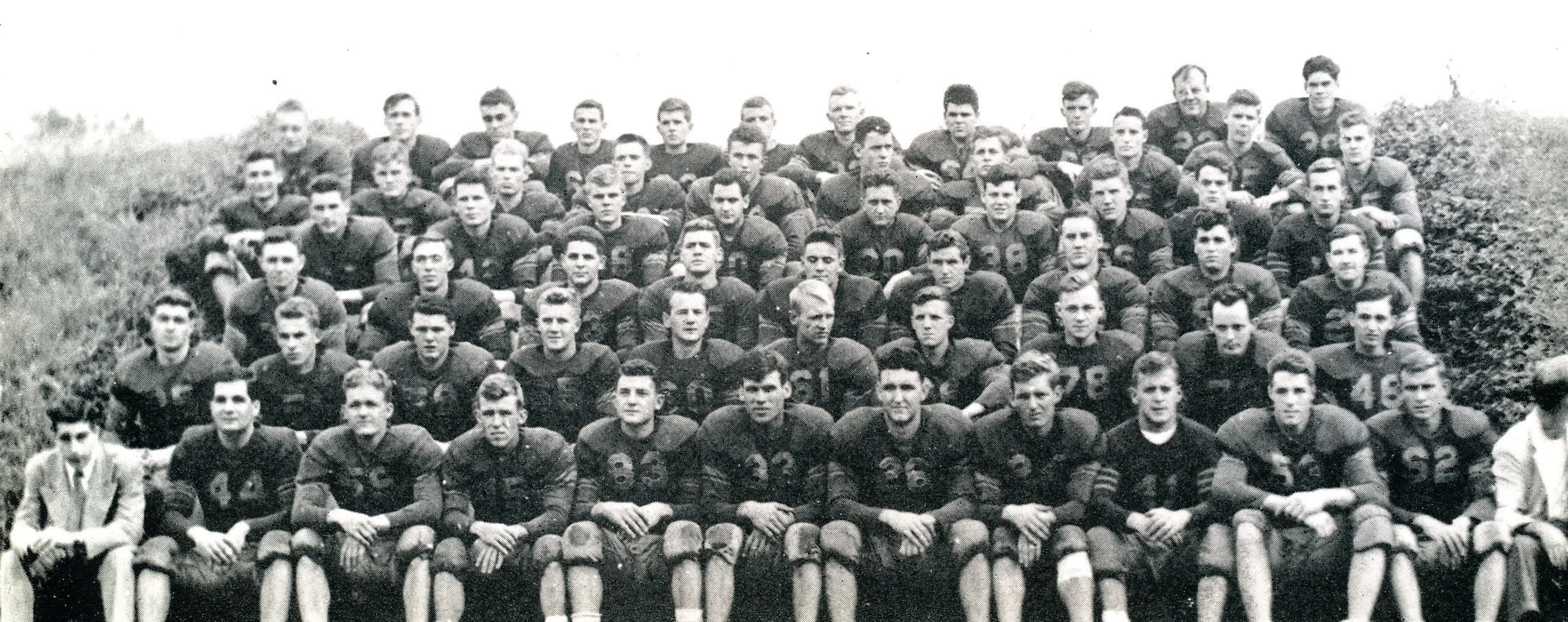
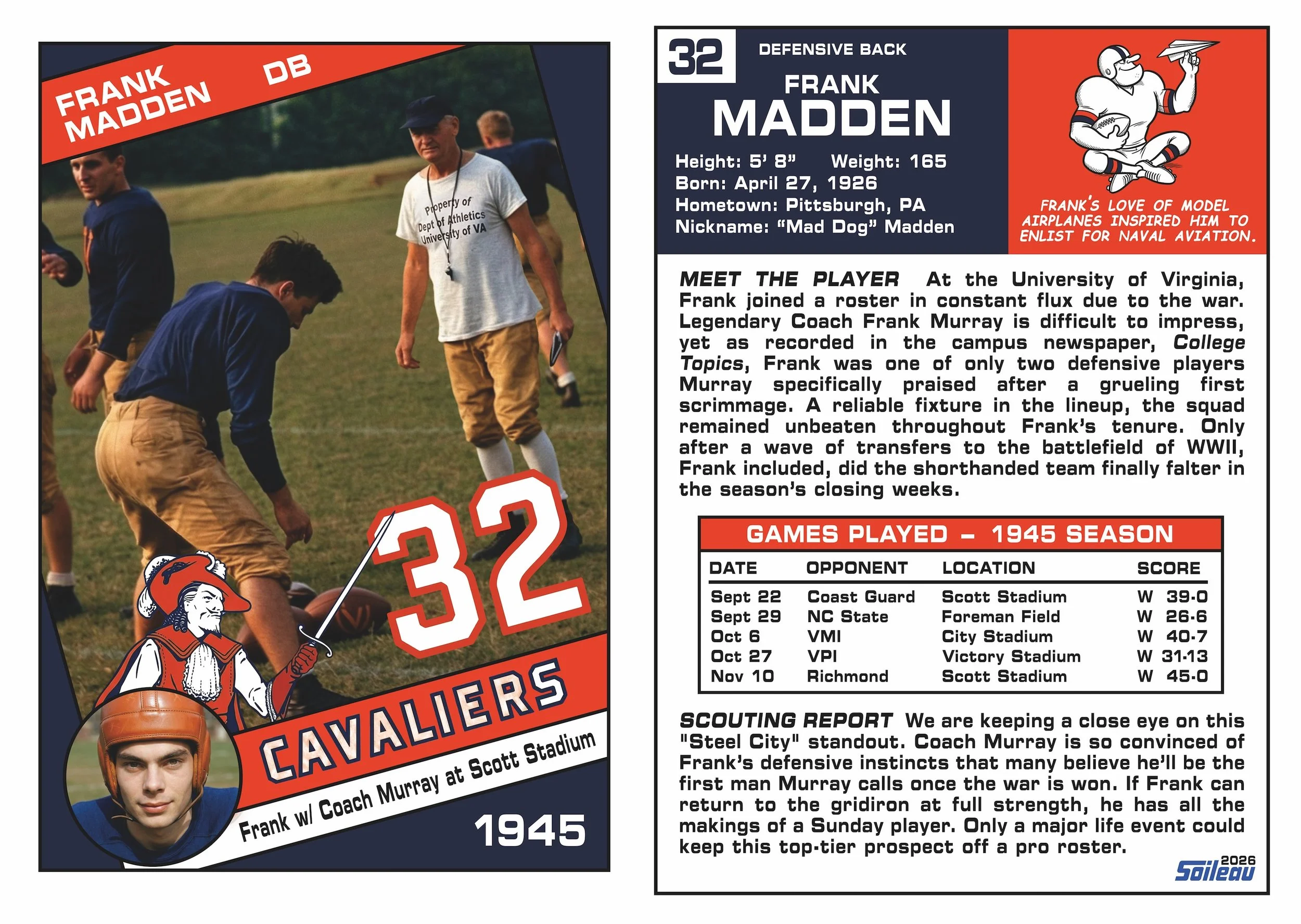
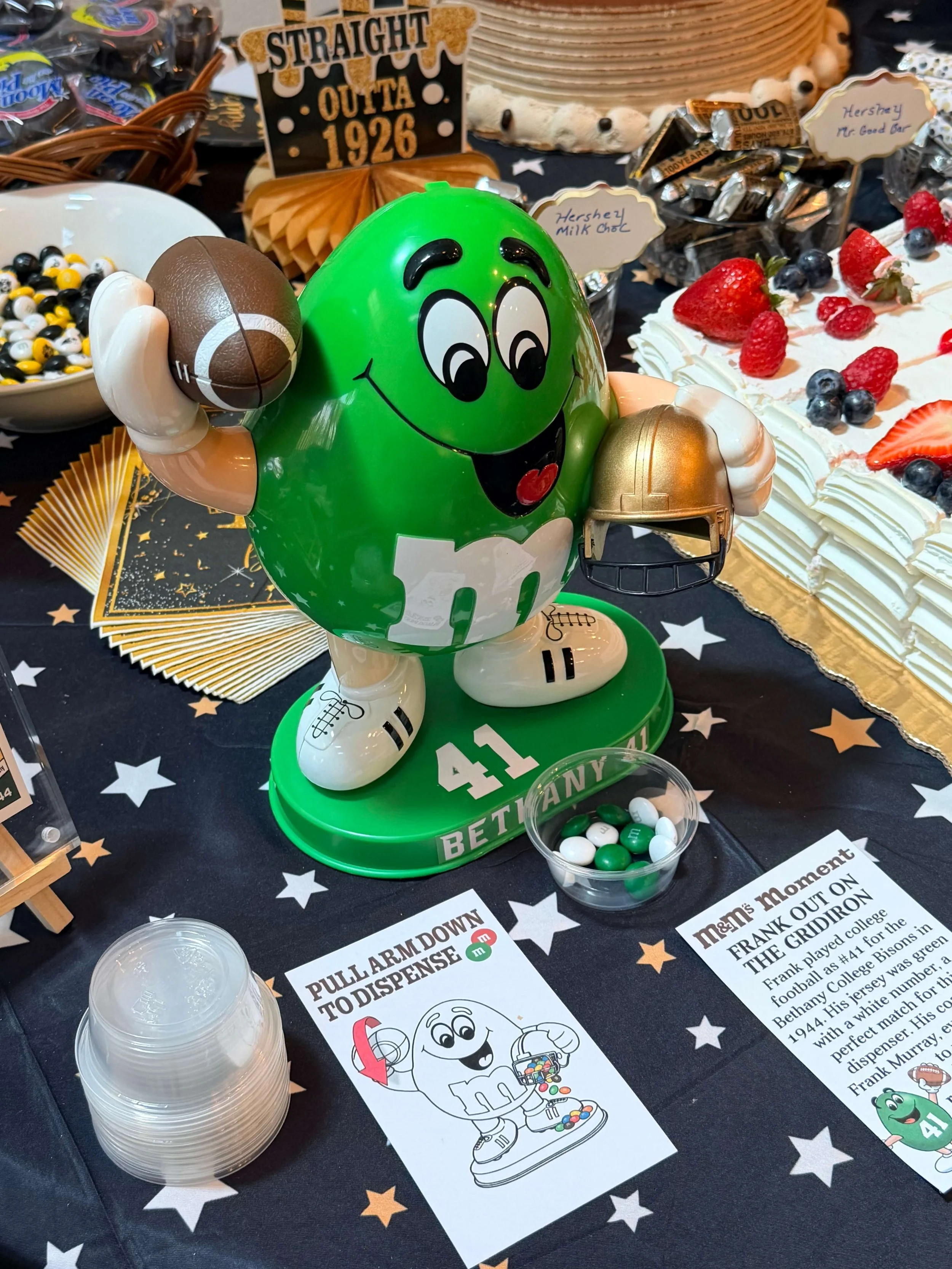
While the program was academic, Frank’s education was equally physical. His athletic prowess followed him into the service; he was quickly selected for the all-star softball and football team at Bethany (1944-1945) playing as #41 for the Bethany Bison.¹ It was during this time that his reputation was cemented in ink. As recorded in his high school newspaper, The Wah Hoo, it was Chief Max (the head of athletics at Bethany) who watched Frank’s ruthless style on the field and officially bestowed upon him the moniker “Mad Dog Madden” (the earliest recorded use the nickname that others would eventually inherit). At the University of Virginia (UVA), this intensity caught the eye of legendary football coach Frank Murray, who saw professional potential in the young seaman. While at UVA, Frank would play defense for the all-star football team at UVA under Frank Murray, wearing #32 on the Virginia Cavaliers football team (1945-1946)² until he was called up by the Navy to ship out.³ The Cavaliers were almost undefeated in 1945. They only lost their last two games after Frank and his fellow military recruits were called away for active duty.
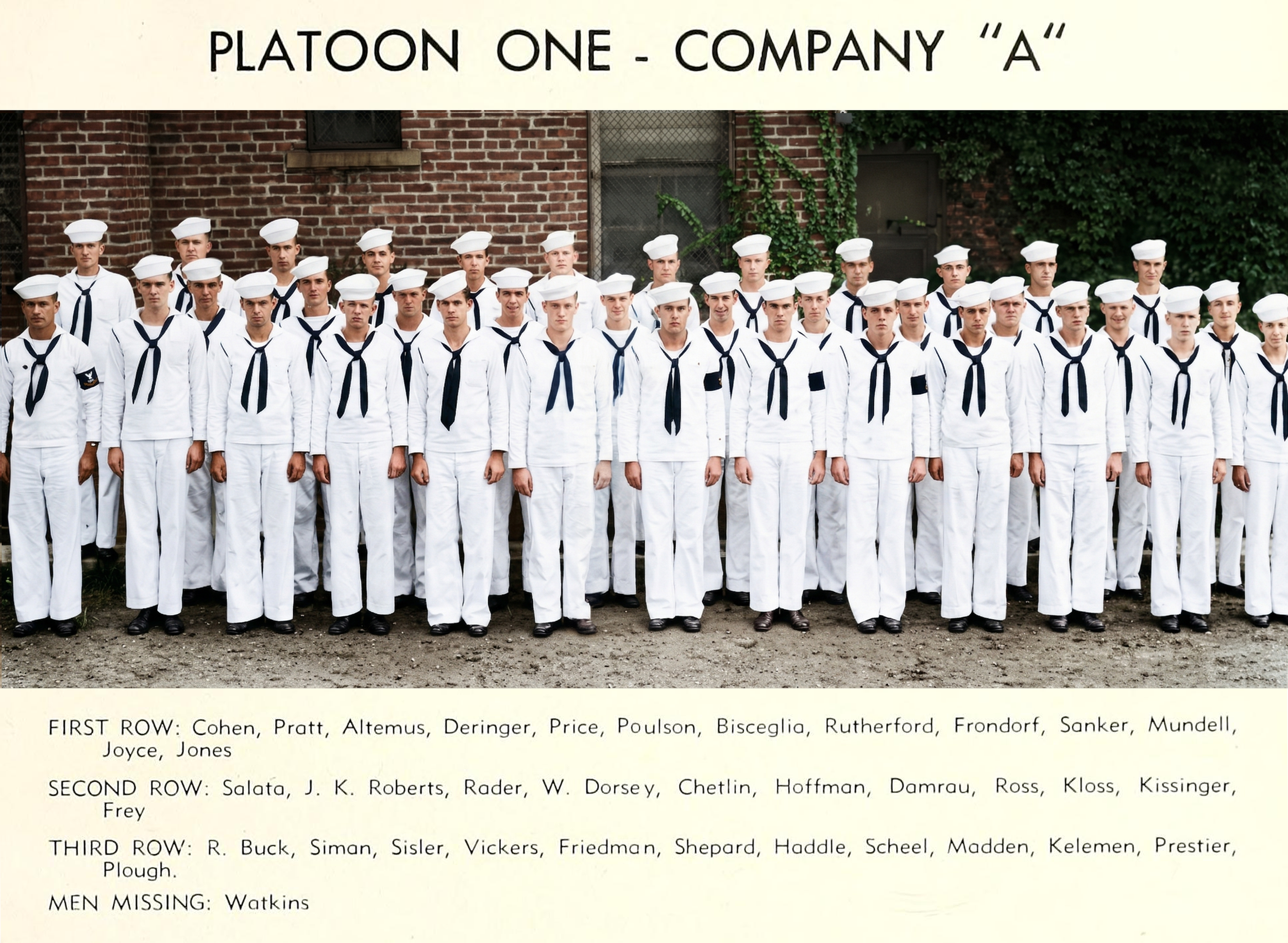
Frank’s journey to the war was not without hurdles. At the U.S. Navy Recruit Training Command in the Great Lakes, he faced the daunting swim test despite never having learned to swim. In a display of sheer resourcefulness, he utilized the crowded chaos of the pool to pull himself along a lane buoy, passing the test without taking a stroke.
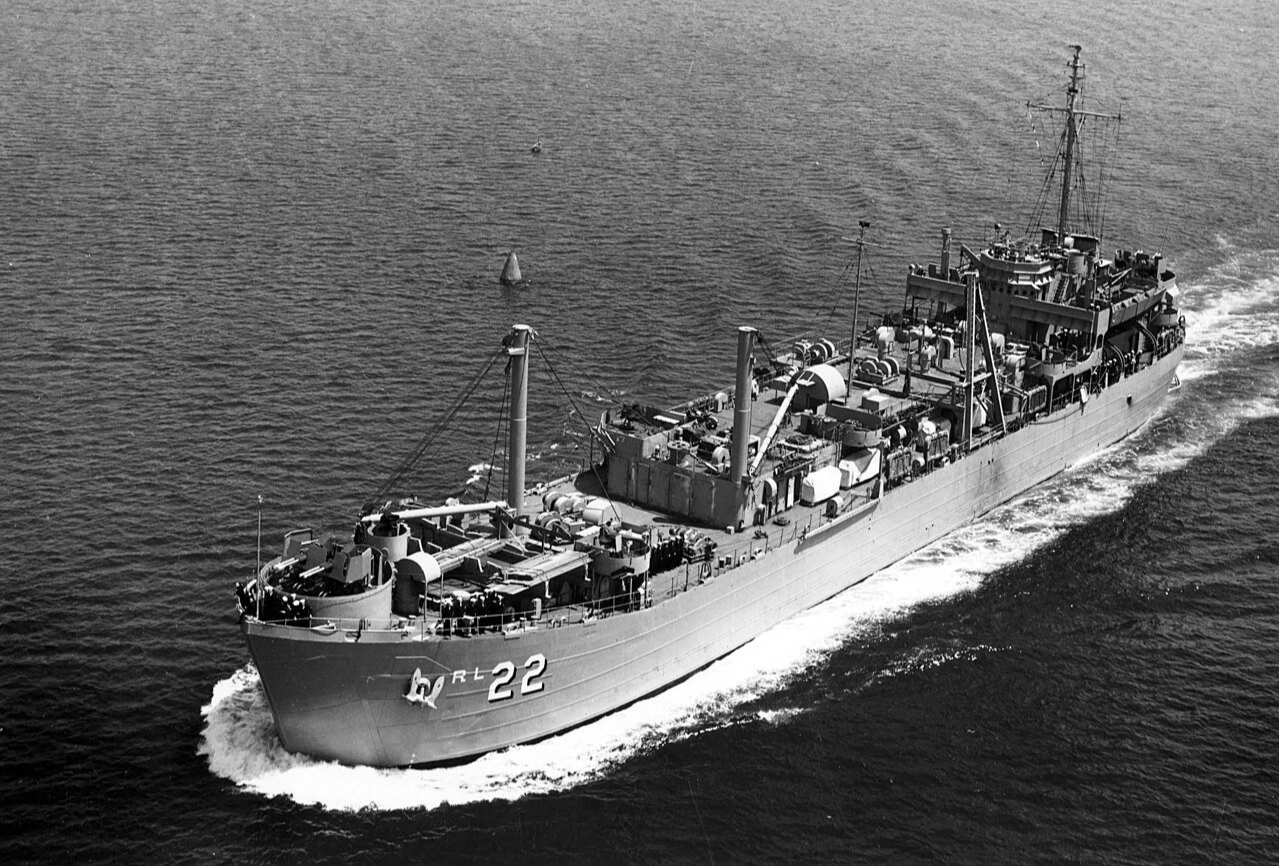
He was eventually assigned to the USS Romulus (ARL-22), an Achelous-class repair ship tasked with keeping the Pacific fleet operational toward the end of the war. The Romulus carried Frank through the Panama Canal and into the heart of the Pacific campaign, supporting operations in the Mariana Islands and eventually Honshu, Japan.
The war’s end brought Frank to a devastated Tokyo, where fortune favored him once again. In a ship-wide lottery to determine which seaman would enjoy a two-week vacation at the Imperial Palace, Frank’s name was drawn. However, the experience was a study in contrasts. While staying at the seat of imperial power, he witnessed the stark, crushing poverty that had befallen the Japanese capital, a memory of post-war ruin that would stay with him forever. The Navy’s V-5 program was drawing to a close and faced with a choice between officer’s training or a return to civilian life, Frank chose an honorable discharge on May 15, 1946, leaving the service as a Seaman 1st Class.
1946–1966: The Long Road to Purpose
Post-war life began with a collision of promise and duty. His former coach, Frank Murray, invited him to Marquette University with the allure of a professional football career, but fate intervened. When Frank’s mother fell ill, he didn't hesitate; he returned to Pittsburgh to care for her, sacrificing his athletic dreams to support the woman who had raised him. He took a grueling job at the post office, working twelve-hour shifts to make ends meet, before eventually finding less physically demanding work at Fort Pitt Bedding.
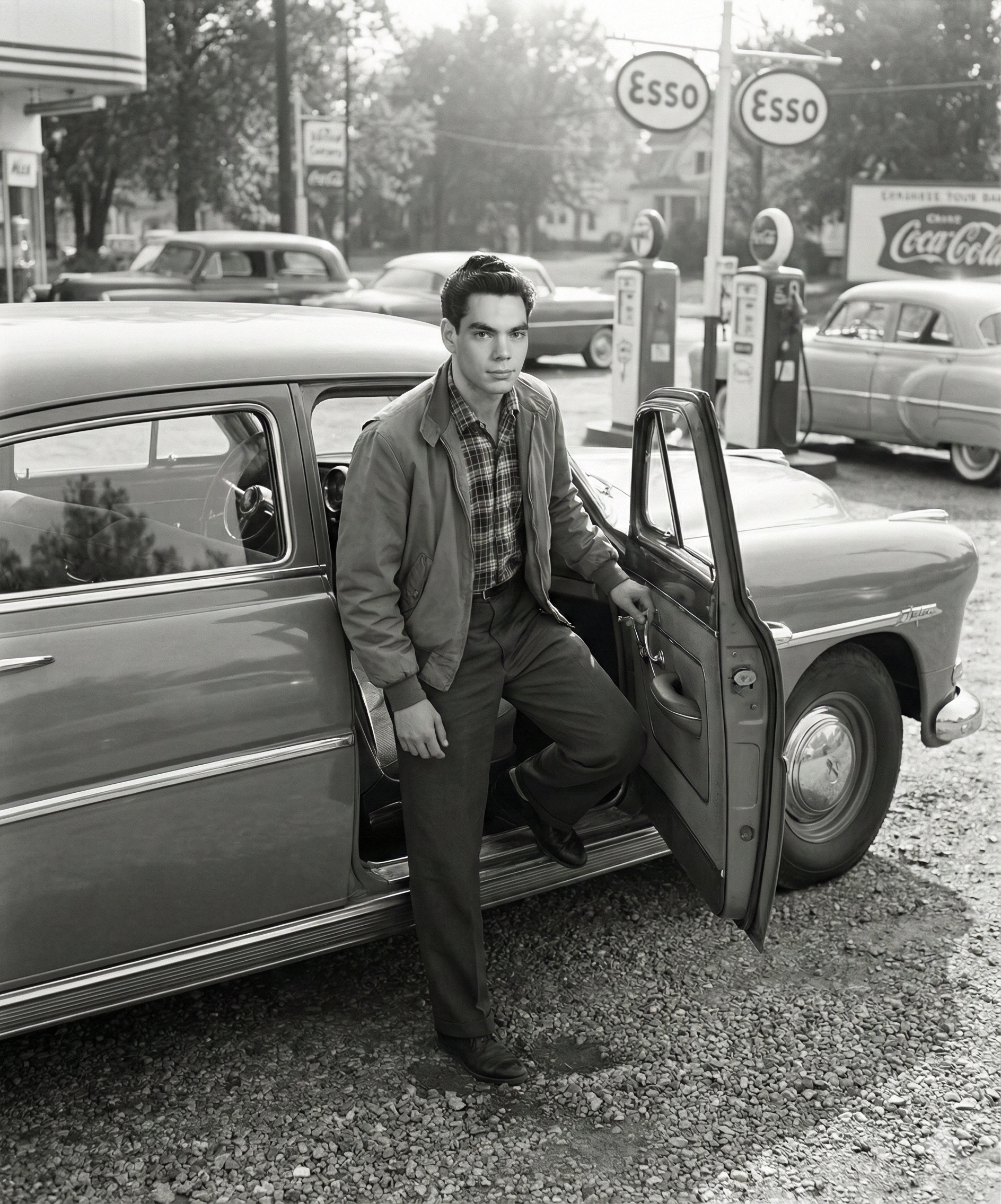
Once his mother recovered, Frank embraced the freedom of the post-war boom. He and two friends piled into his Royal Blue Hudson Commodore 6, a symbol of late-40s automotive luxury, and drove south to the sands of Florida for the races at Daytona, a precursor to the modern Daytona 500 culture.
Returning to Pennsylvania with renewed focus, Frank finished his degree in Psychology and Sociology at the University of Pittsburgh in 1950. However, he quickly discovered that the job market for a bachelor’s degree in those fields was thin. To pay the bills, Frank pivoted to finance. While his days were spent working at several different firms, eventually rising to the rank of manager, his nights were spent alive on the dance floor. He became a regular at the local dance halls, moving to the iconic big band rhythms of Glenn Miller, Tommy Dorsey, and Les Brown.
Despite his success in the financial sector working for Associates Discounts and ABC, Inc in Pennsylvania, the pull toward social service remained.
1967–1971: The City on the Hill
Frank returned to academia to sharpen his skills, culminating where he earned his Master’s degree at West Virginia University in Morgantown propelling him into a long career in public service, which began in 1967 in the corridors of the Pennsylvania Department of Health and Welfare in Harrisburg (known locally as “Foggy Bottom”). Though important work, Frank’s skills were initially stifled in his role as a policy and procedure specialist, but his record caught the eye of a personnel manager who recruited him for the role of Director of Social Service Development Programs at the Harrisburg State Hospital. Founded in 1851, this institution was known as the "City on the Hill"—a massive, self-contained campus for the mentally ill.
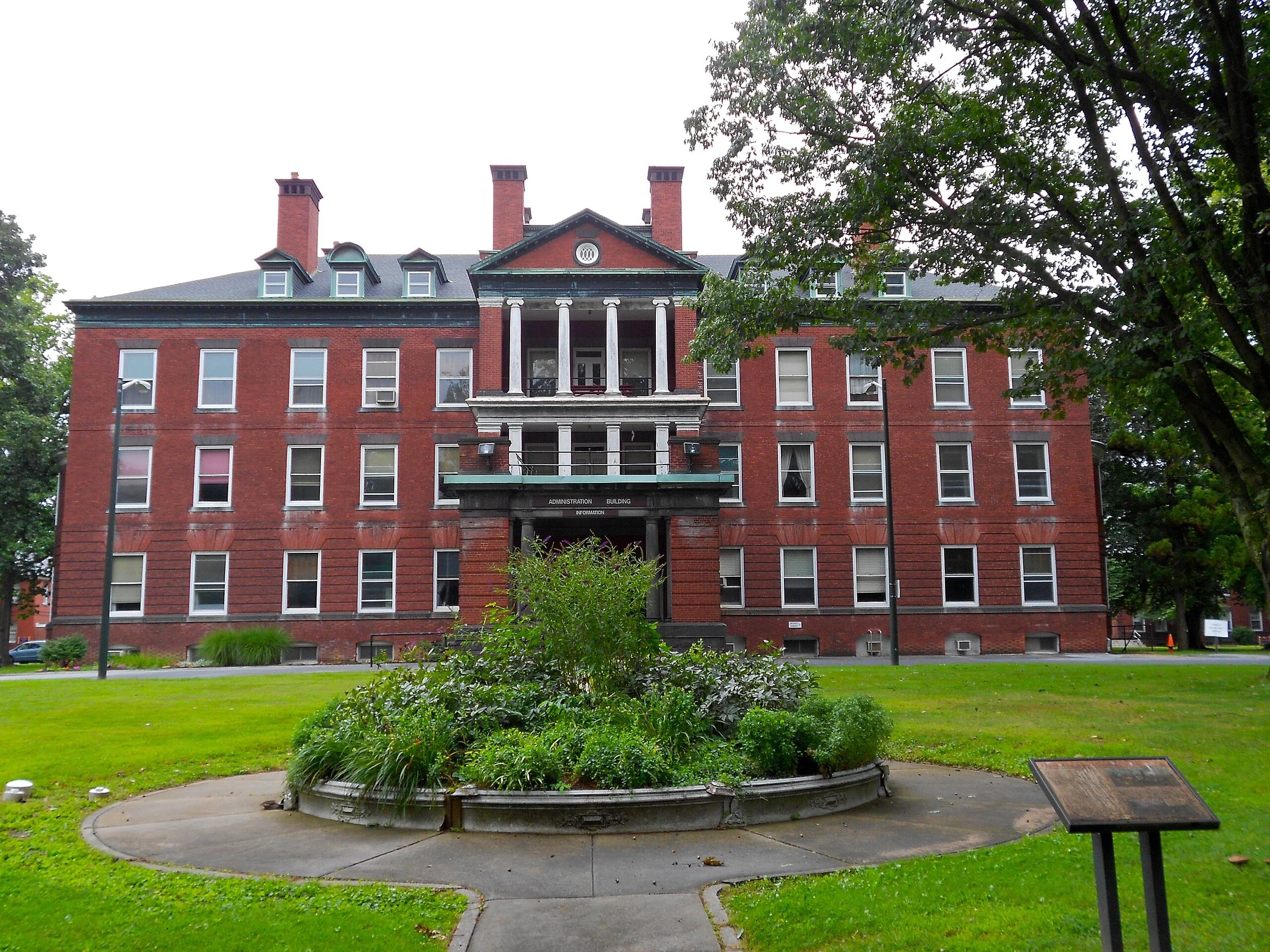
It was here that Frank made his mark. Against the backdrop of President Kennedy’s push for community mental health care, the hospital struggled with a "revolving door" of discharged patients returning months later. The key turned out to be identifying that veterans and other patients were being dumped into a society they weren't ready for, Frank proposed a radical solution: a transitional living space on campus.
With the support of Superintendent Dr. S. Philips Laucks, Frank built a mock apartment to teach patients daily living routines. He expanded this into the "Community Placement Program," securing homes in the neighborhood where patients could live semi-independently. Understanding the era's stigma around mental health, Frank personally canvassed the surrounding six-block radius to reassure neighbors. The result was a dramatic reduction in readmission rates and a successful model for reintegration with unheard of community support.
1971–1985: Shaping the Next Generation
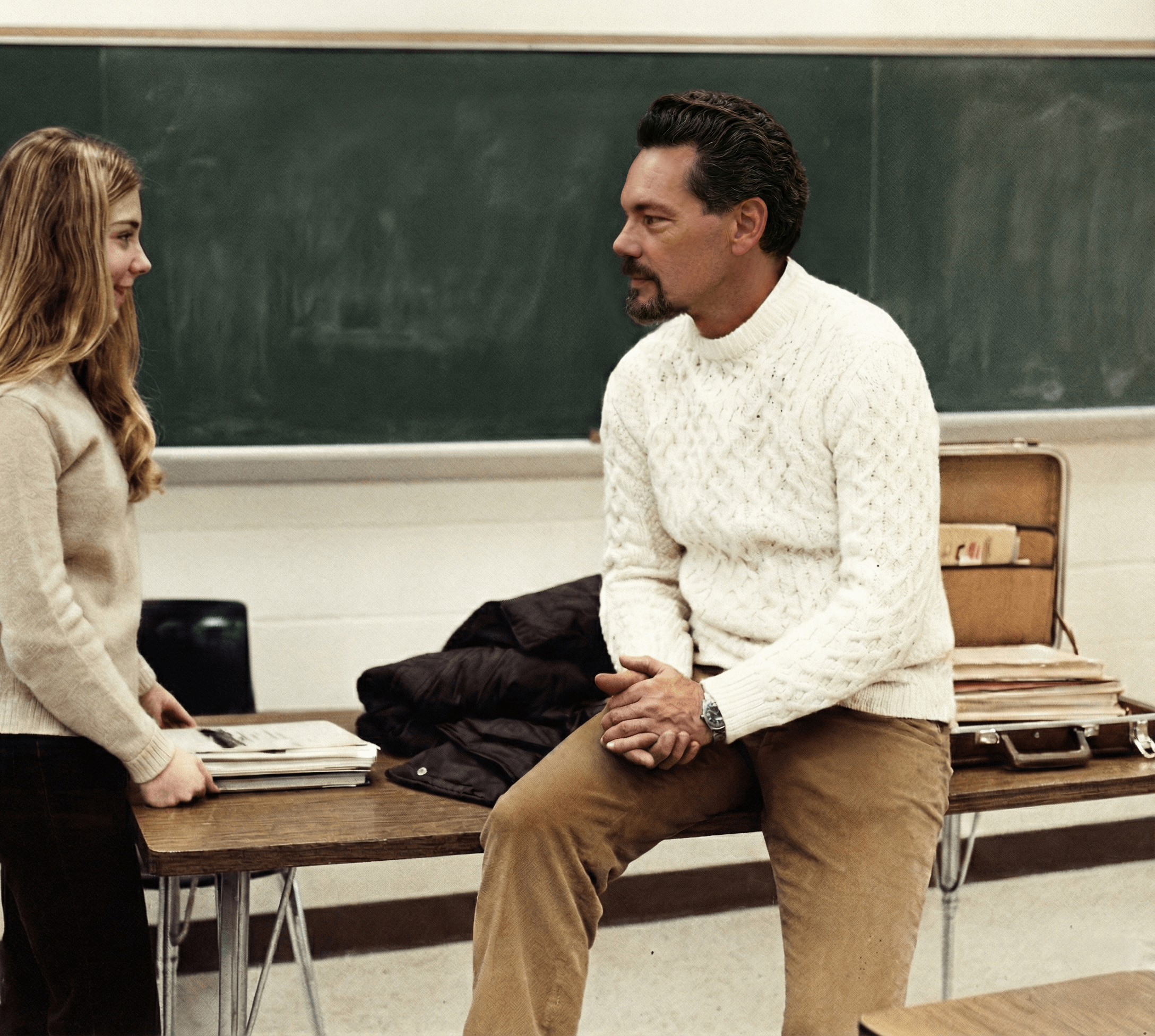
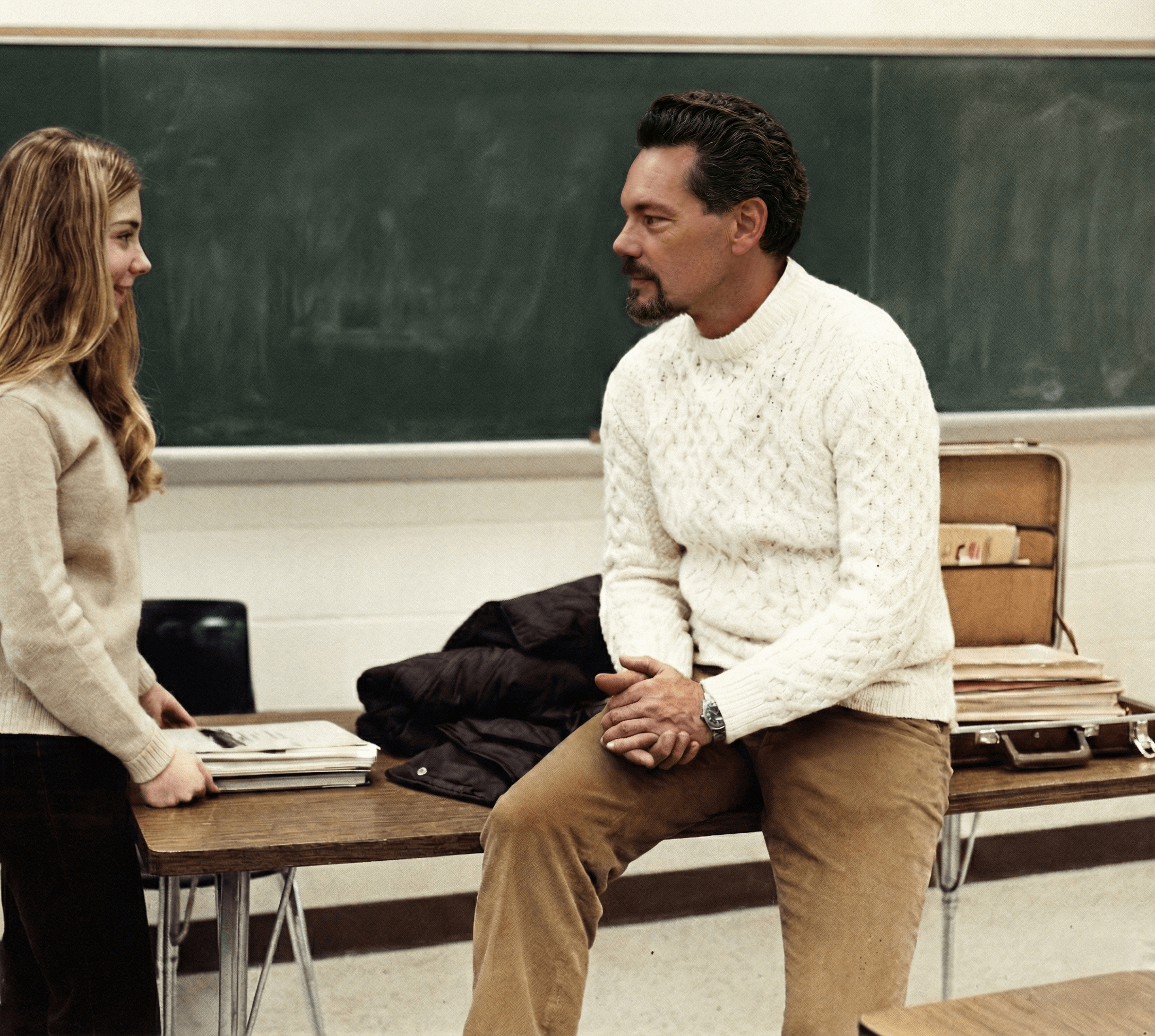
Frank’s next chapter in late 1971 took him to the lecture halls of Shippensburg State College (now University). As an Associate Professor, he did far more than lecture; he built a legacy. He created a course called the “Human Relations Lab (SWK150)” which continues to be offered at the university over fifty years later. He developed internship programs so robust and effective that the National Association of Social Workers (NASW) recruited him to evaluate and rate other programs throughout the region. He also lectured at neighboring institutions, including Lebanon Valley College and Harrisburg Area Community College
Driven by a lifelong thirst for knowledge, Frank practiced what he preached. He began commuting to Johns Hopkins University, working tirelessly toward a doctorate. However, when the university changed its policy to require students to live on campus—an impossibility for Frank at the time—he didn't give up. Instead, he pivoted, converting his hard-earned credits into a Master’s degree in Public Health and Mental Hygiene. Never one to leave a goal unfinished, he eventually completed his Doctorate in Education from the University of Sarasota.
Despite his success and over a decade in the classroom, Frank’s academic career ended on a stark matter of principle. When the faculty committee withheld his earned sabbaticals because he declined joining the teacher's union Frank decided it was time to walk away on his own terms.
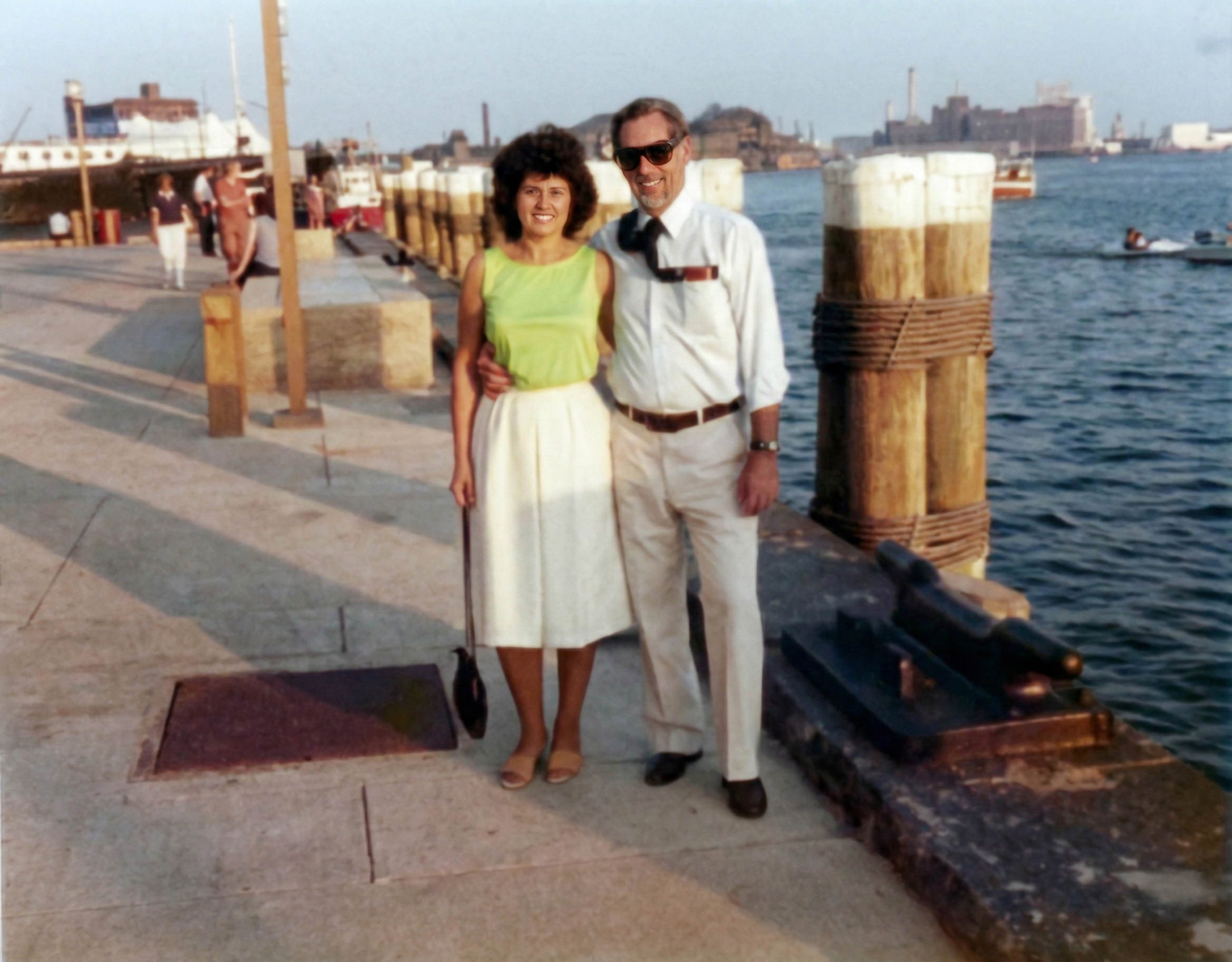
Amidst these professional changes, in 1985, he married the love of his life, Margaret Louise. Together, they looked south, ready for a new beginning in the warmth of the Sunshine State.
1986–2010: The Sunshine State Entrepreneur
Retiring to the Gulf Coast of Florida, Frank proved that "retirement" was a relative term. He bought a small vending machine business with four units and aggressively expanded it to over 300 machines. Realizing he was working "nine days a week," he sold the business and pivoted to real estate in 1994, earning the prestigious GRI designation.
His final transition was personal. Having visited Anna Maria Island with MargaretLouise on many occasions, he one day asked if she would like to live there. When she responded with a resounding “YES”, Frank walked her across the street from the friend’s home they were visiting and dug into his pocket producing a major surprise, the deed to the property. This home is where they would spend their remaining years together.
2011–2015: Crisis and Resilience on the Gulf
Even in his 80s, Frank’s drive to serve his community remained undiminished. Following the catastrophic Deepwater Horizon Oil Spill in 2010, the Gulf Coast faced an economic reckoning. While the black sludge did not wash up on Manatee County’s shores, the fear it generated devastated the local tourism industry.
Frank stepped in to help weather the storm. Partnering with a lifelong friend, he guided local business owners through the complex legal labyrinth of court-appointed settlements. By securing vital monetary claims for damages, he helped ensure that the local economy survived the disaster.
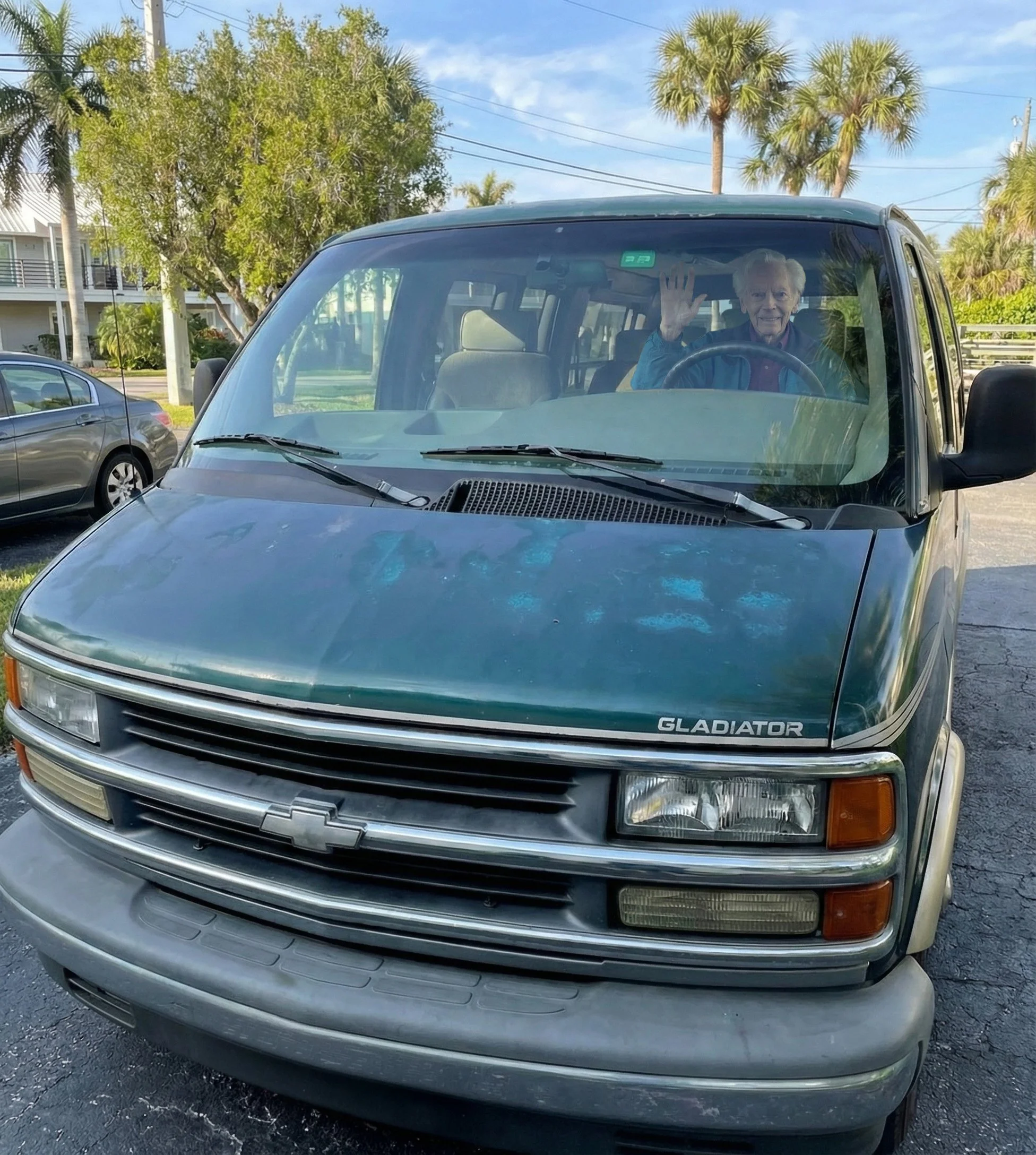
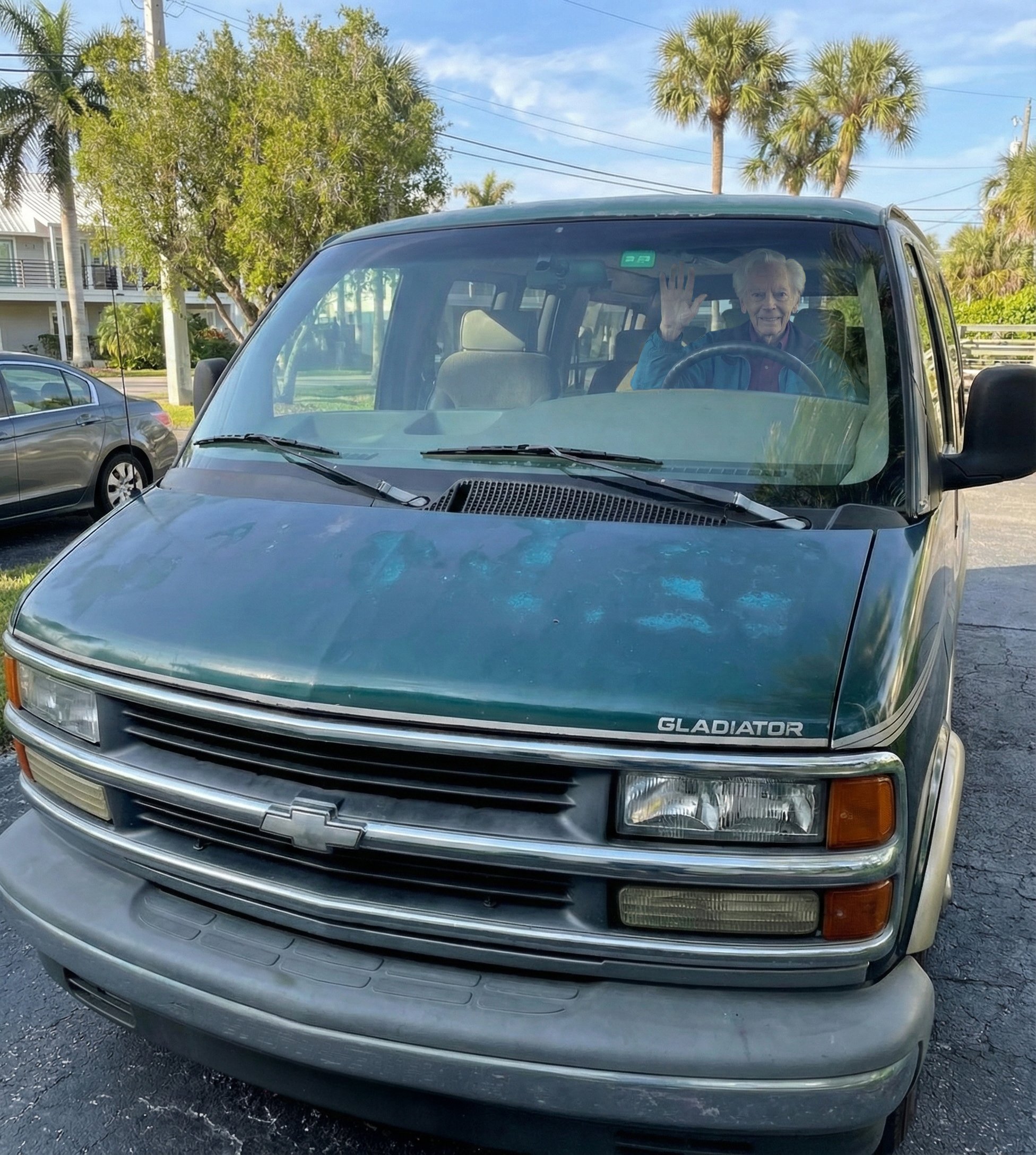
During this same period, Frank faced his own physical battles, receiving a cancer diagnosis not once, but twice. Channeling the same fighting spirit he learned on the streets of Depression-era Pittsburgh, he defeated the disease both times and remains cancer-free to this day. He credits a combination of modalities for continued healthy prognosis, not the least of which is his BEMER Pro vascular therapy device, which keeps his blood flowing strong. Despite his age he continues to drive his late 1990s Chevrolet Express 1500 Gladiator passenger van.
2016–2026: The "Retirement" of a Centenarian
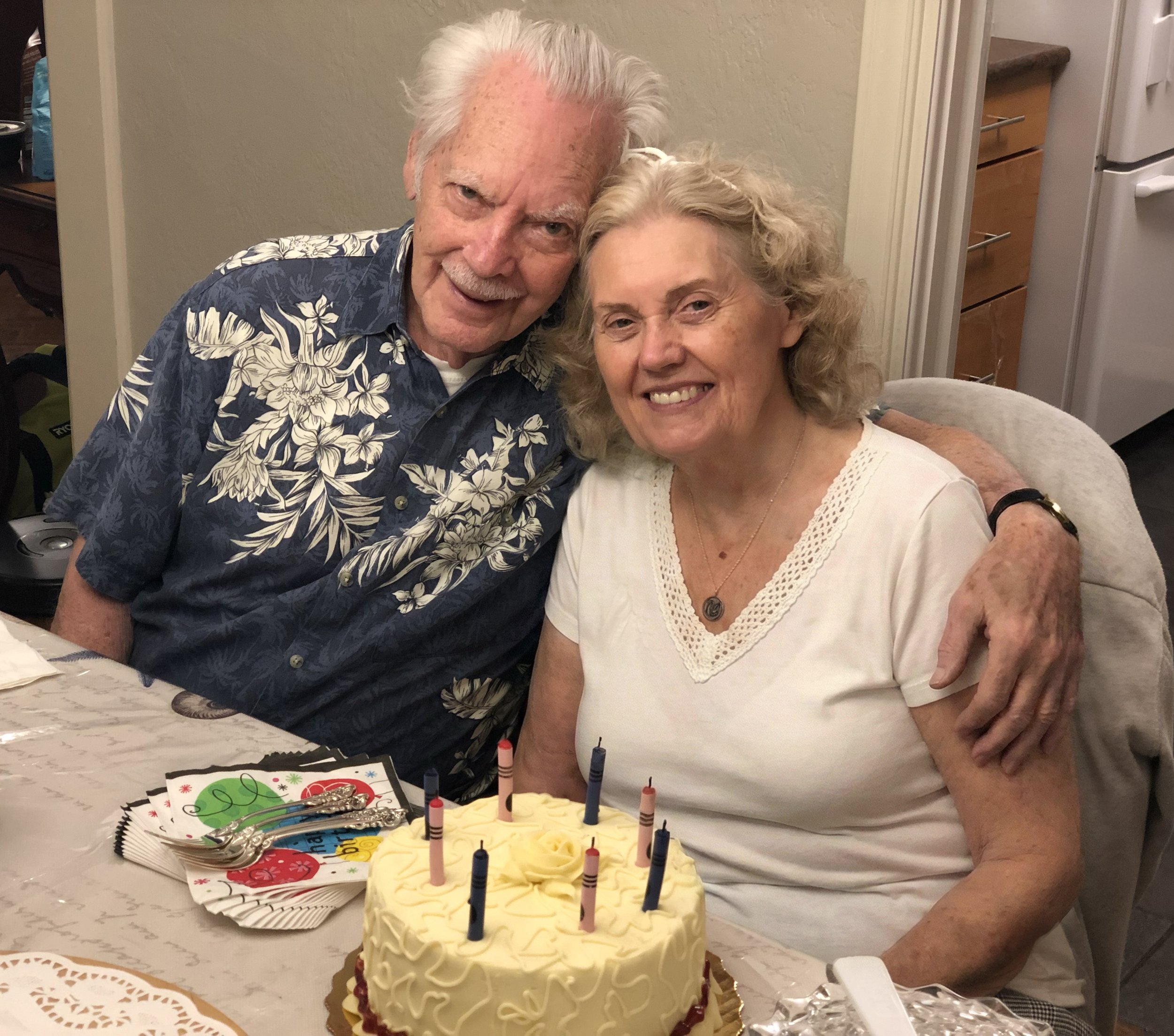
After the final oil spill settlement ended, Frank decided it was finally time to retire—at the age of 90.
While the plan was to sit back and relax, Frank’s relentless work ethic made "taking it easy" a foreign concept. He transitioned into the role of "Mr. Fix-It," personally tackling home improvement projects that would daunt men half his age. Having worked continuously until the age of 90, the last true vacation he took was arguably his 1950 road trip to the Daytona 500. Even after forty years of living in the Sunshine State, he has never once had the chance to visit its most famous attraction, Walt Disney World.
In early 2026, Frank reached two monumental milestones: his upcoming 100th birthday and his 40th wedding anniversary with the love of his life, MargaretLouise Madden.
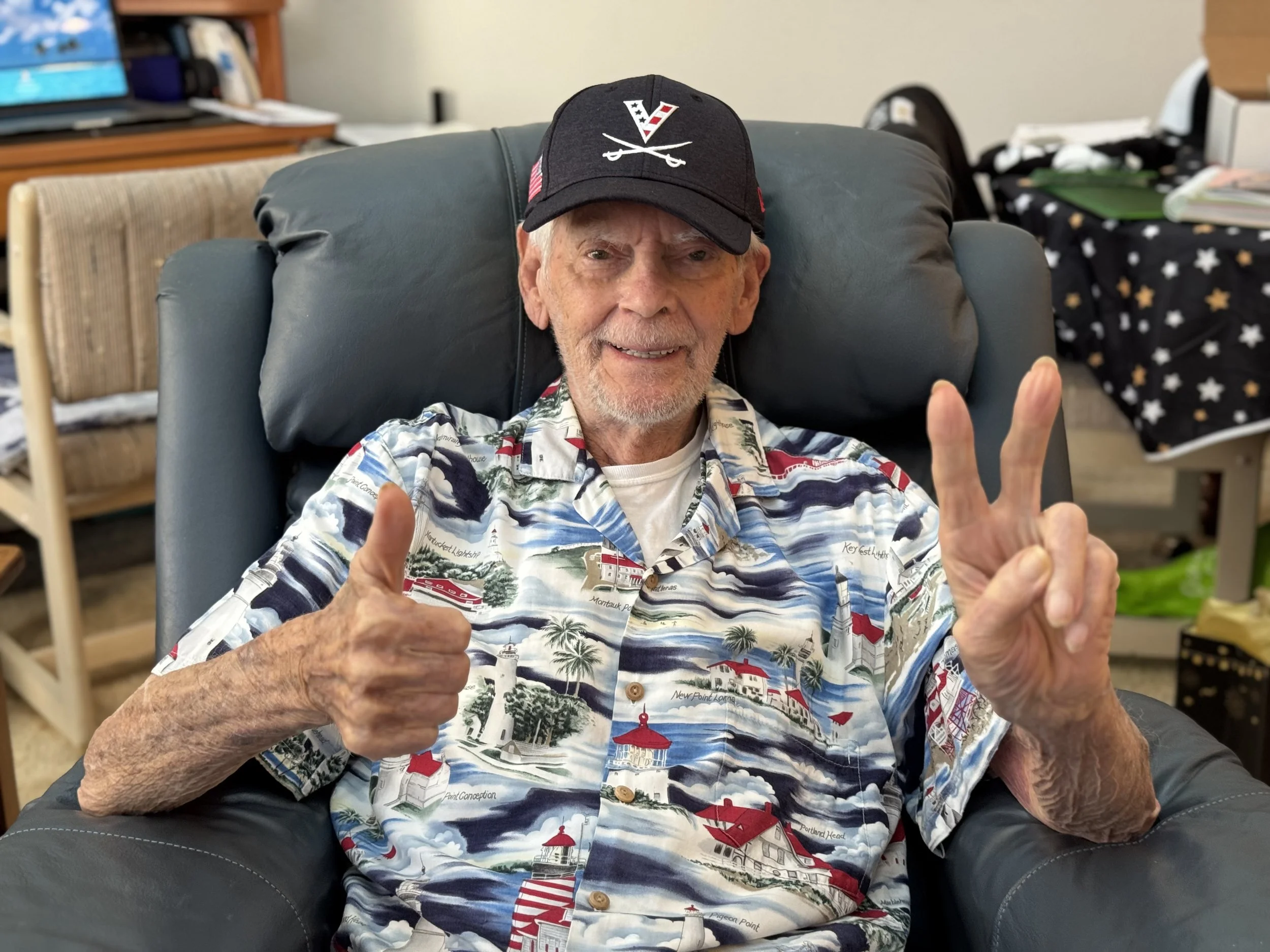
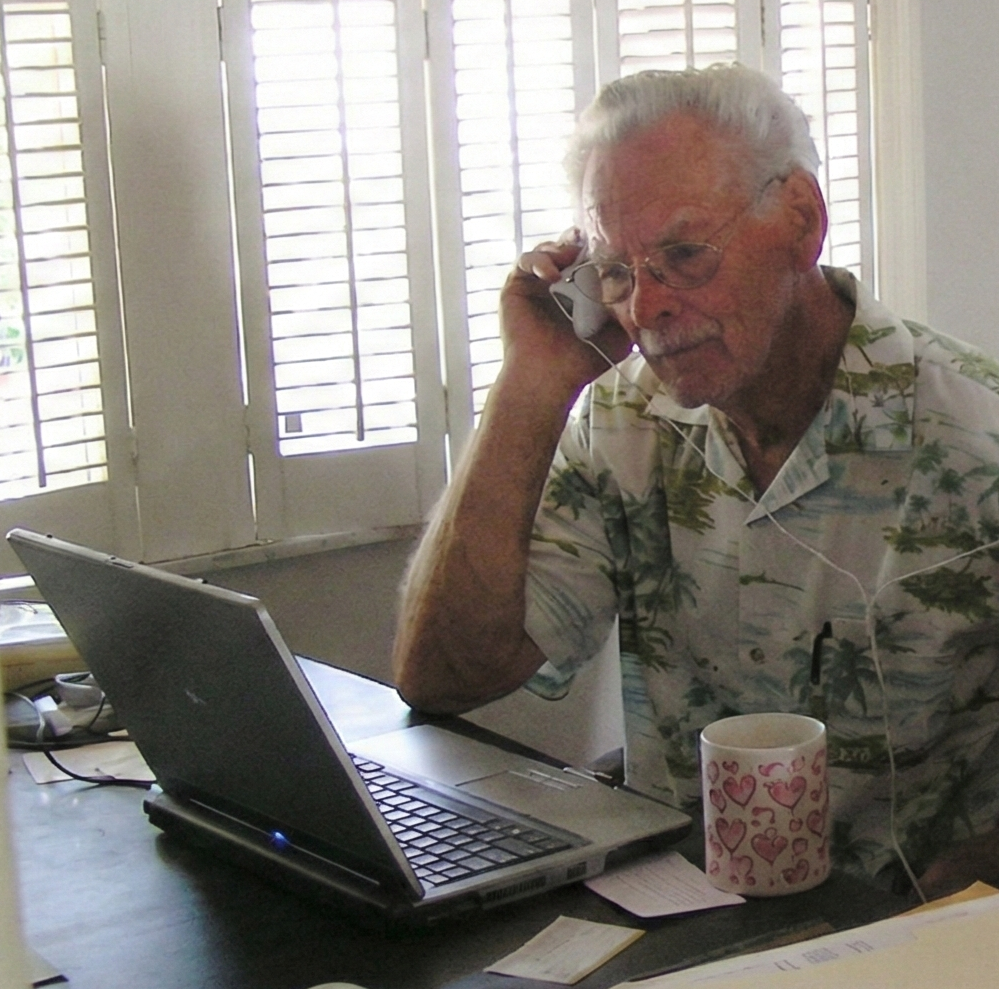
Today, Frank remains mentally sharp and culturally connected, blending old-school grit with modern convenience. He is surprisingly tech-savvy, firing up his MacBook Pro daily to research the stock market and scour the latest world news. True to his roots, his blood still runs black and gold; he never misses a snap of a Pittsburgh Steelers game, cheering them on with the same intensity that once earned him the nickname "Mad Dog Madden" on the gridiron. His routine is peppered with his favorite culinary comforts, including chicken nuggets from Chick-fil-A and classic Philly Cheesesteaks from his local favorite Joey D's. When the laptop is closed and the game is over, the house is filled with the sounds of the era that shaped him—the swing of Glenn Miller and the jazz of Louis “Satchmo” Armstrong.
Frank’s 100th Birthday
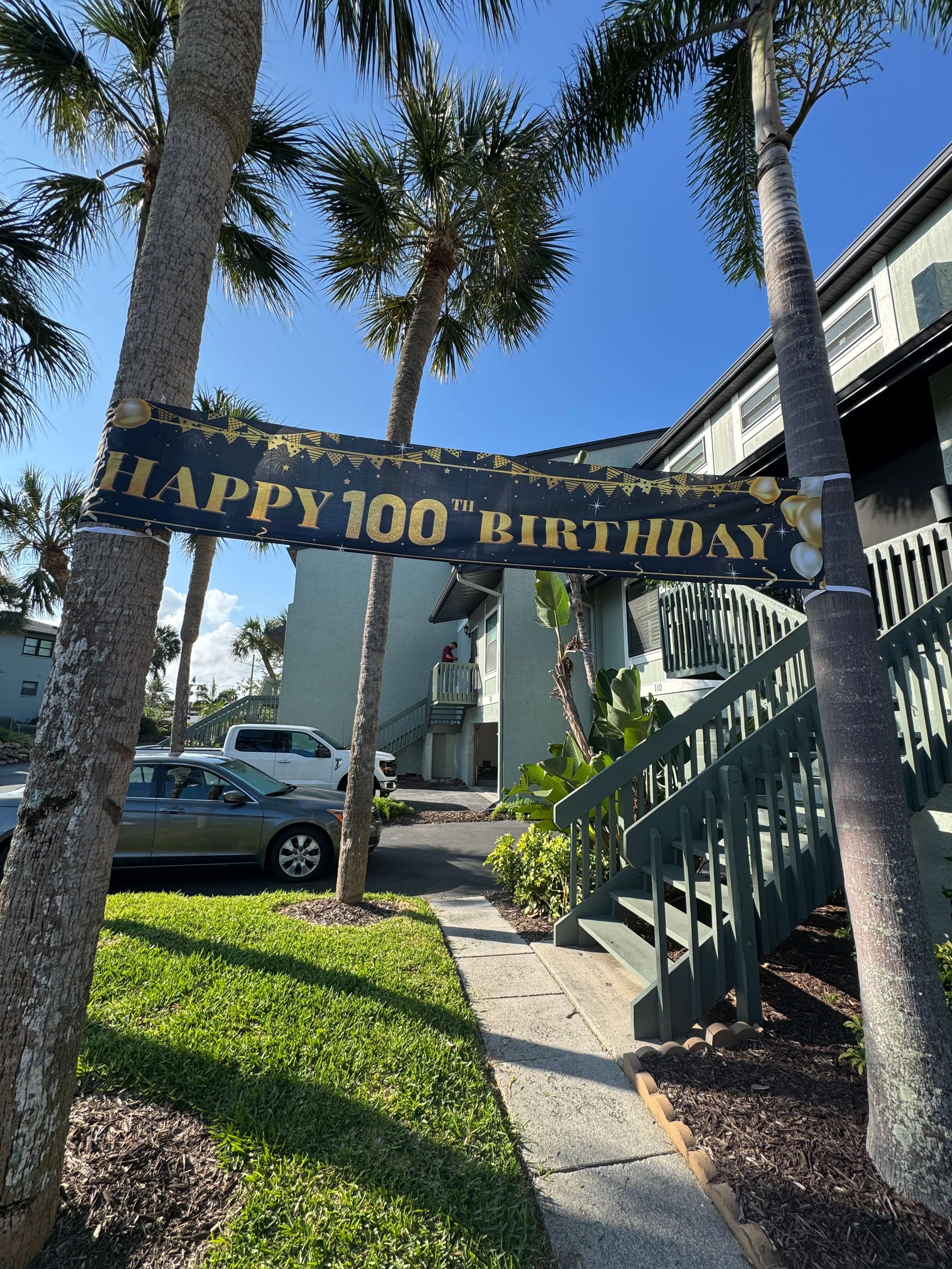
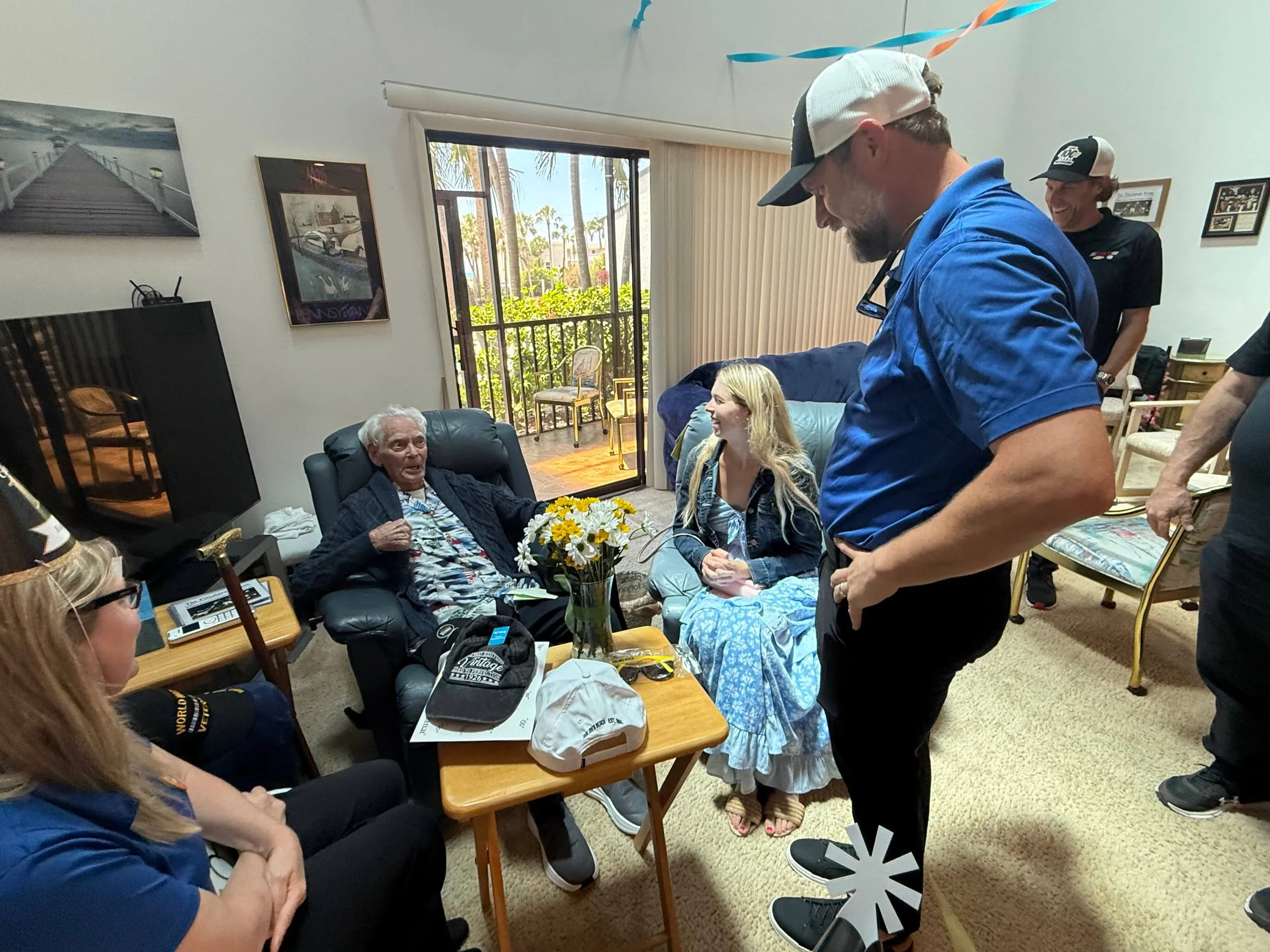
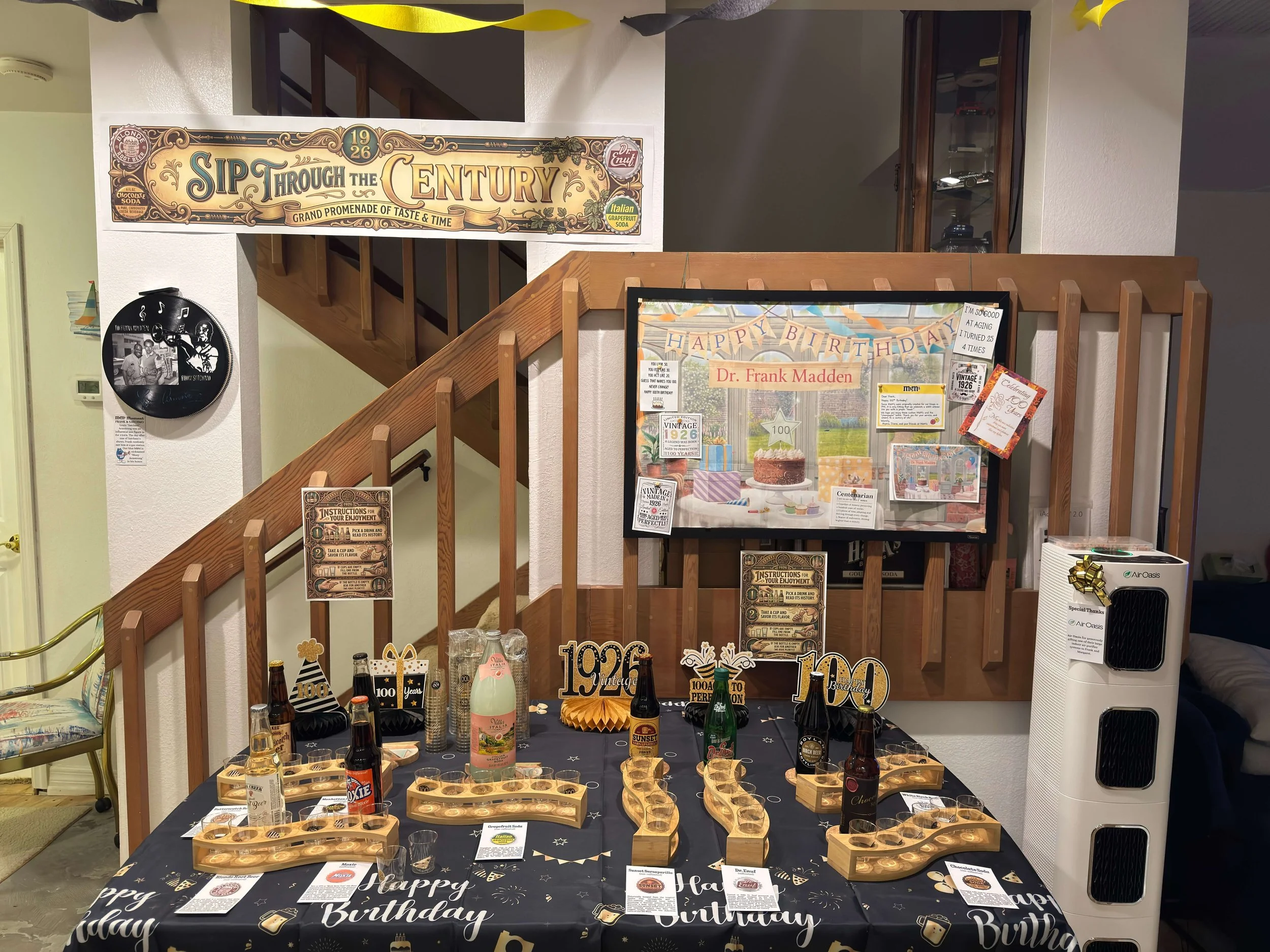
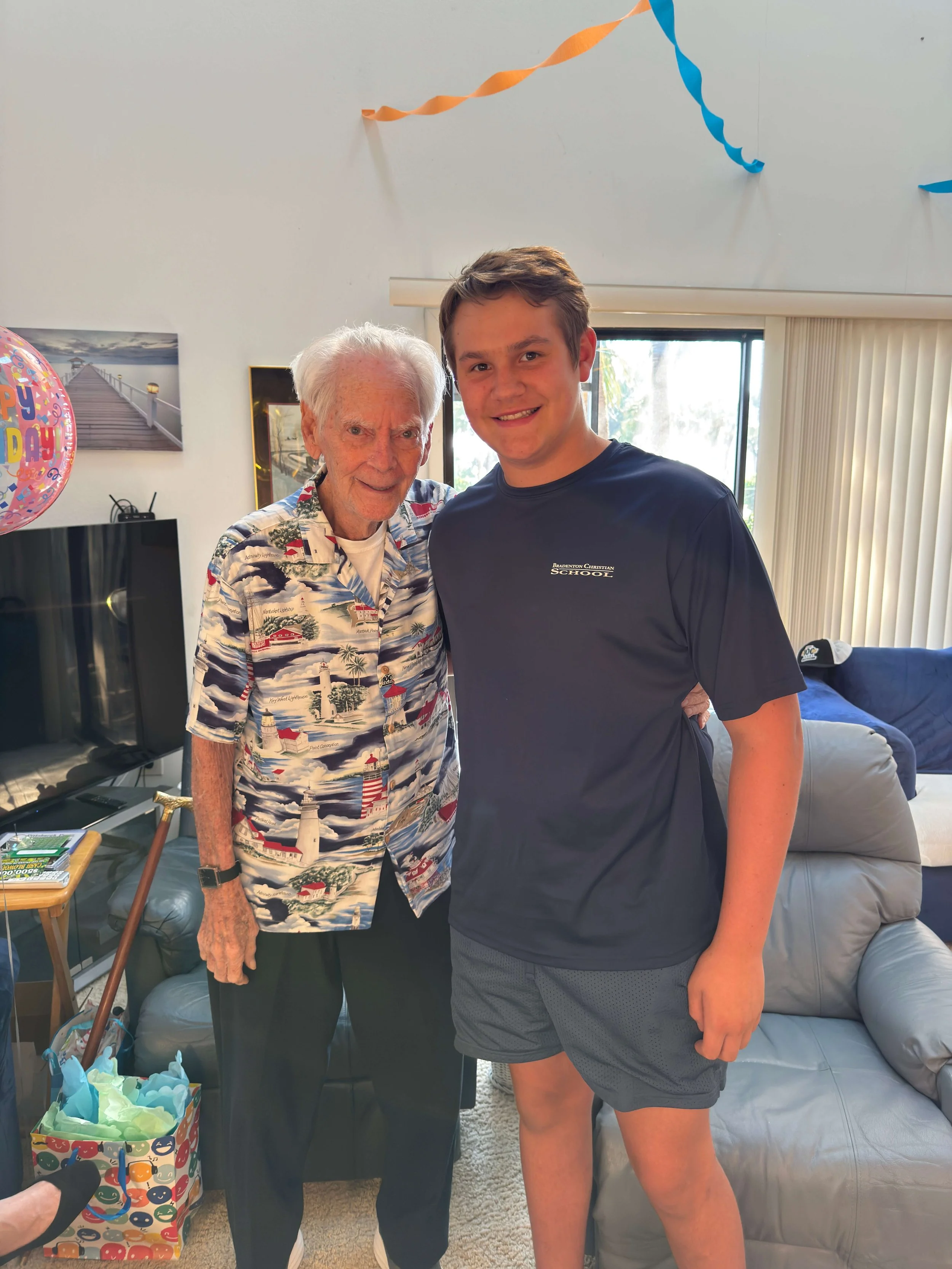
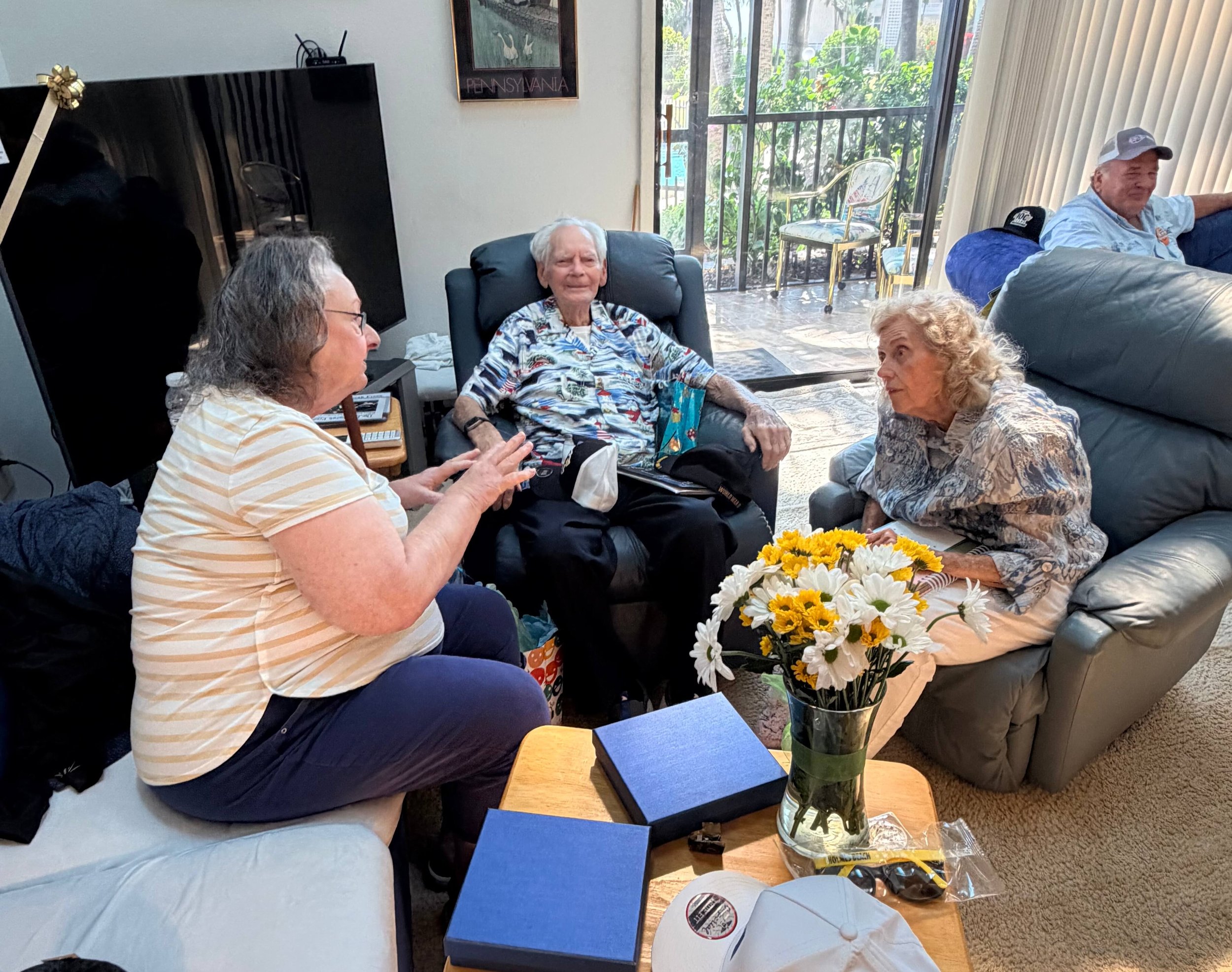
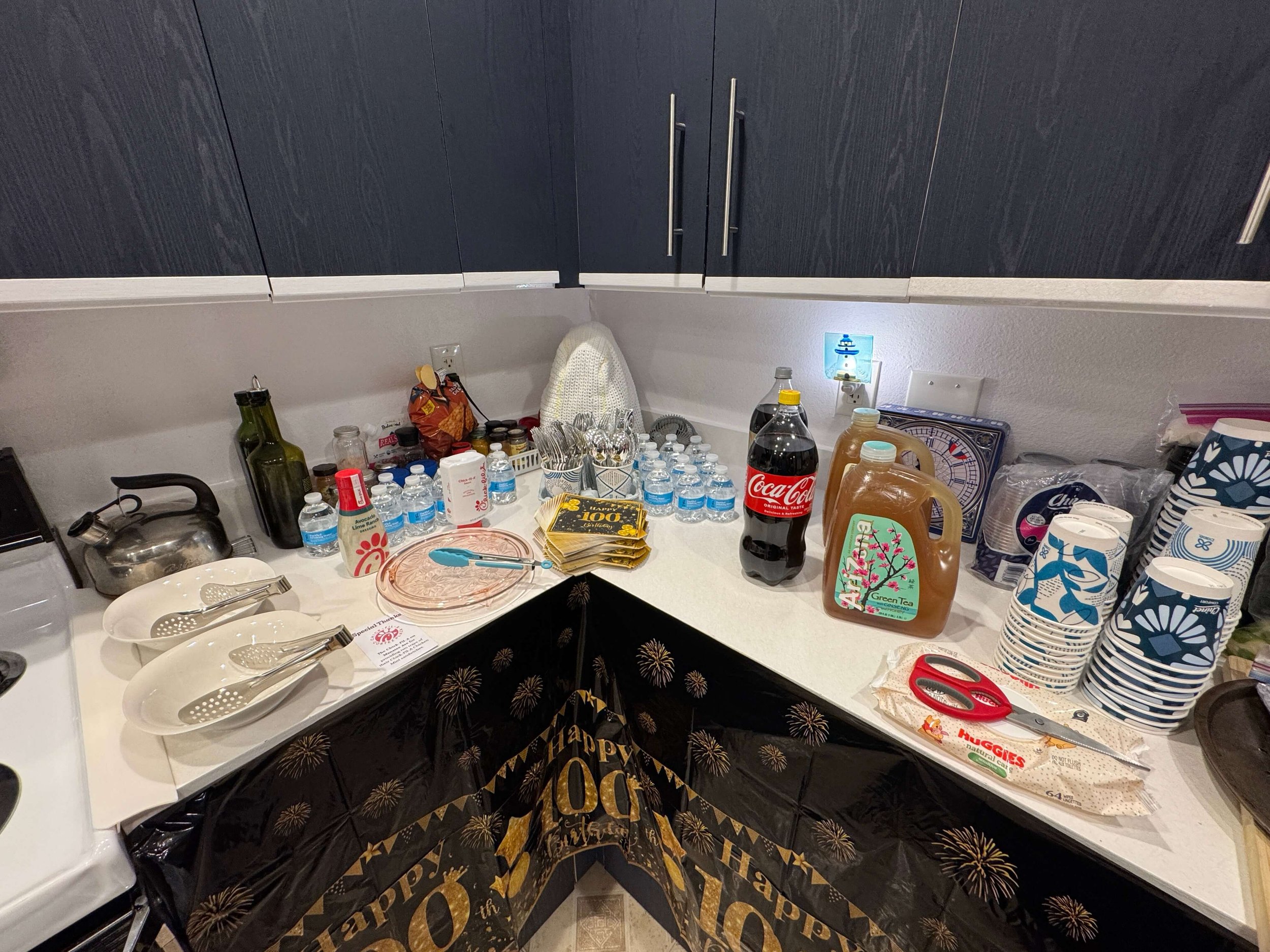
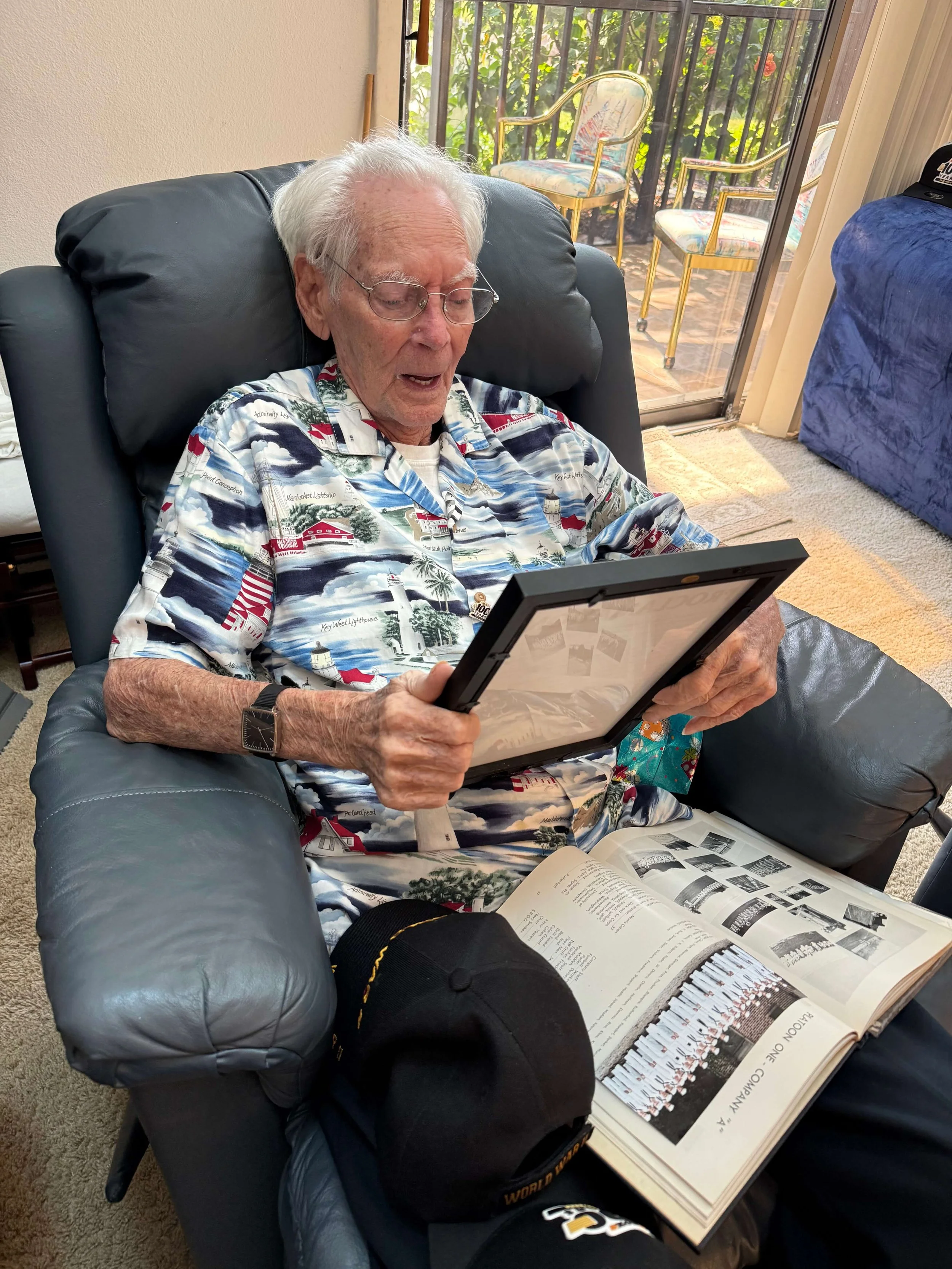
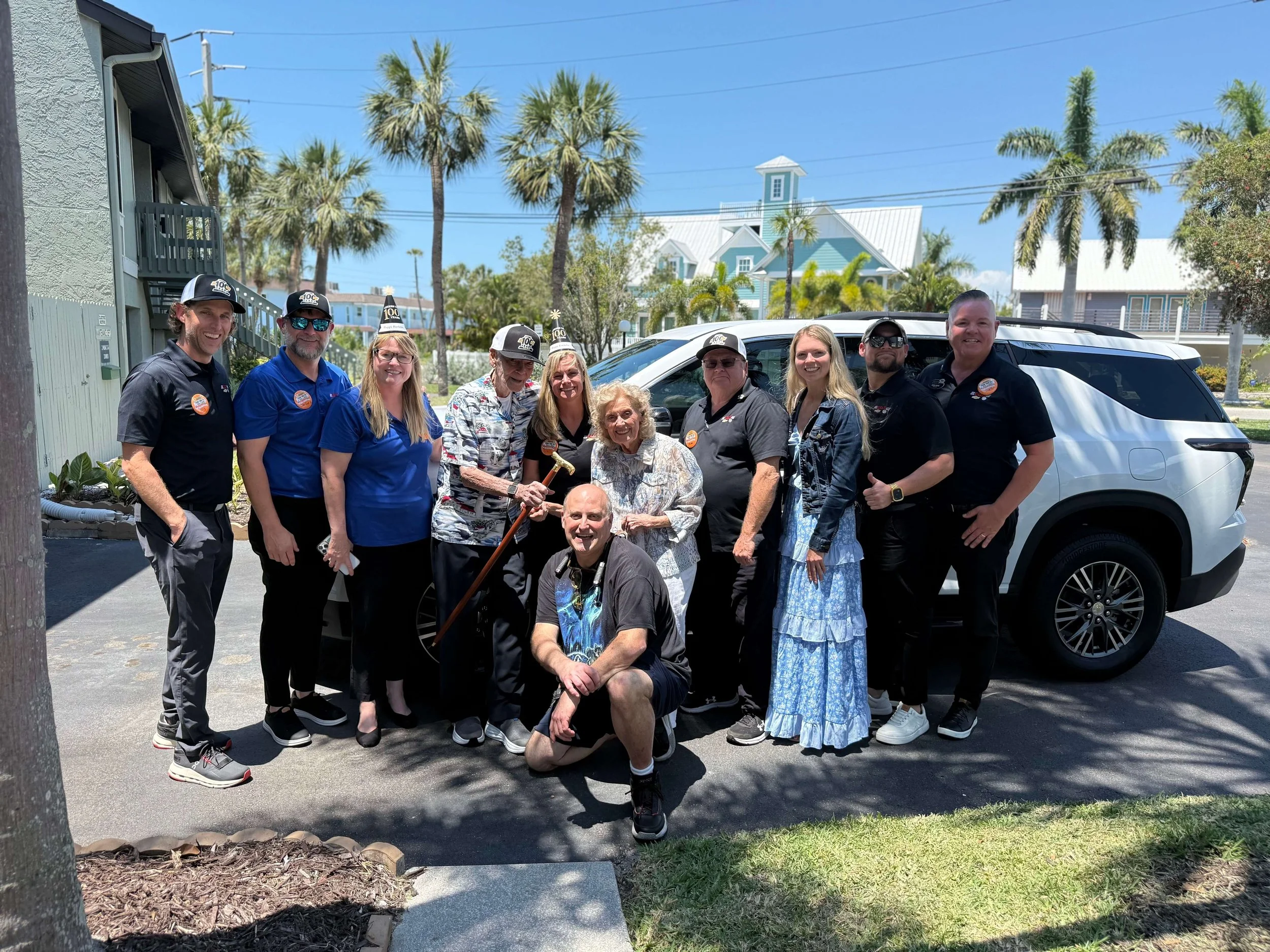
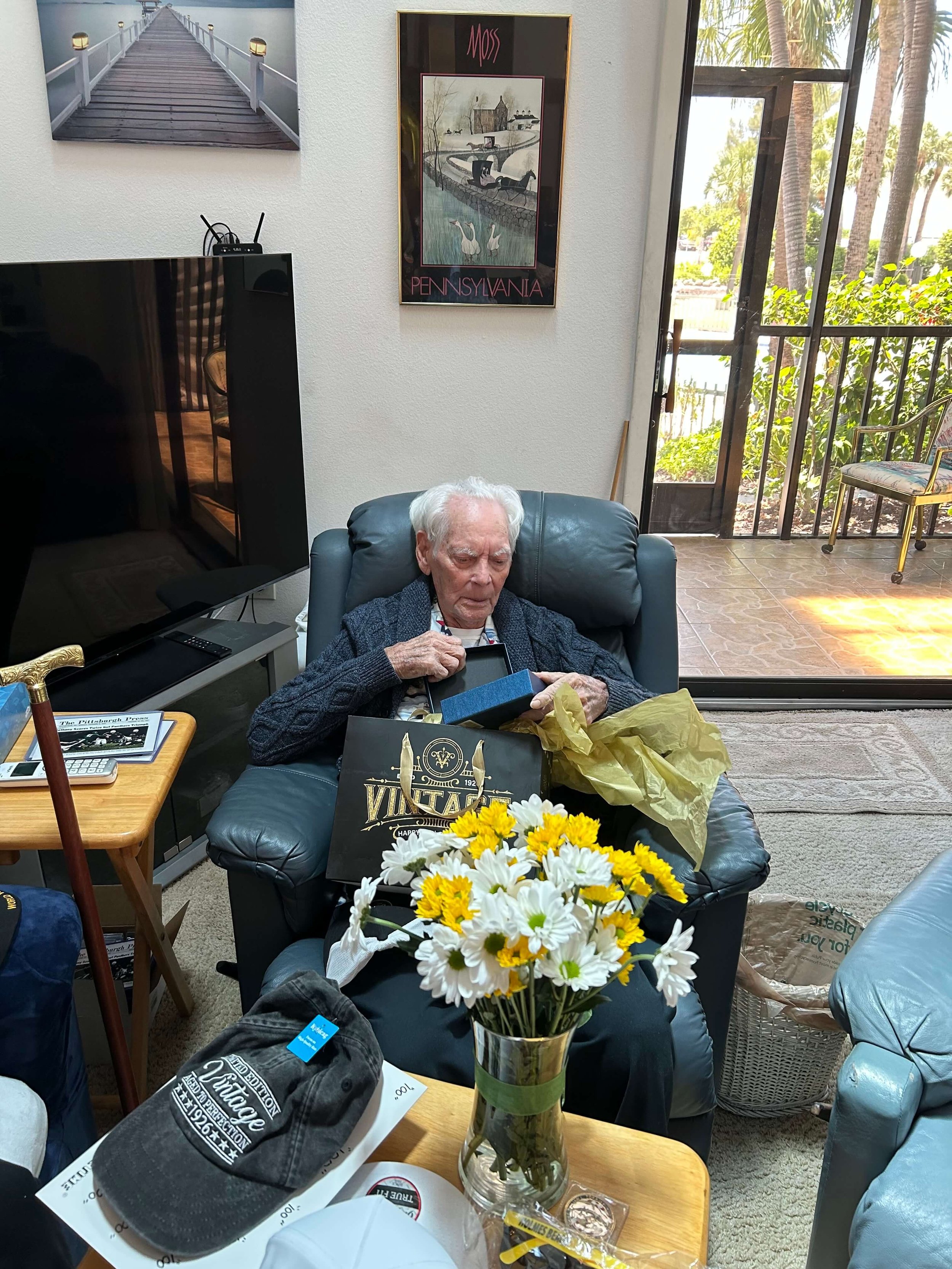
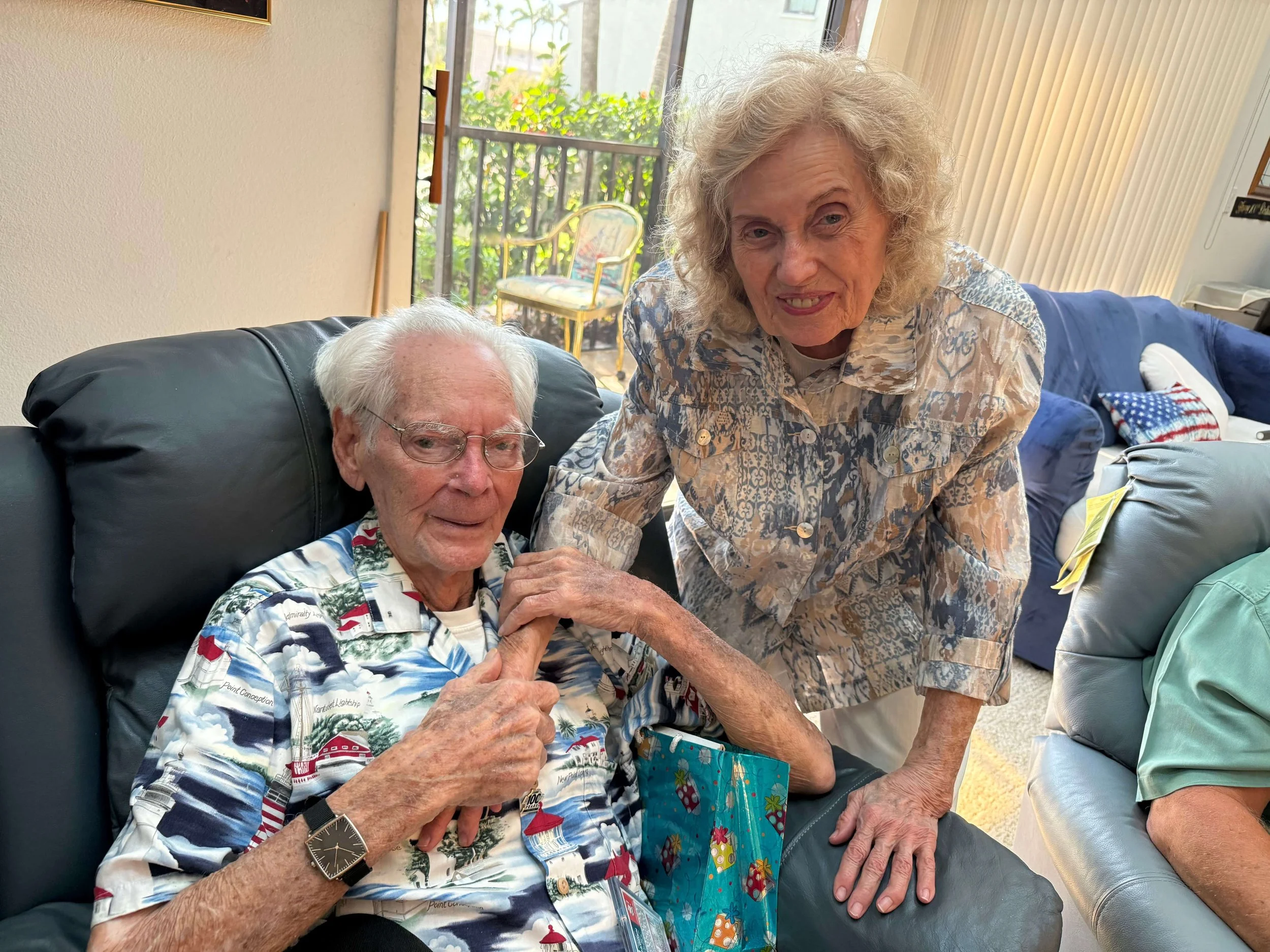
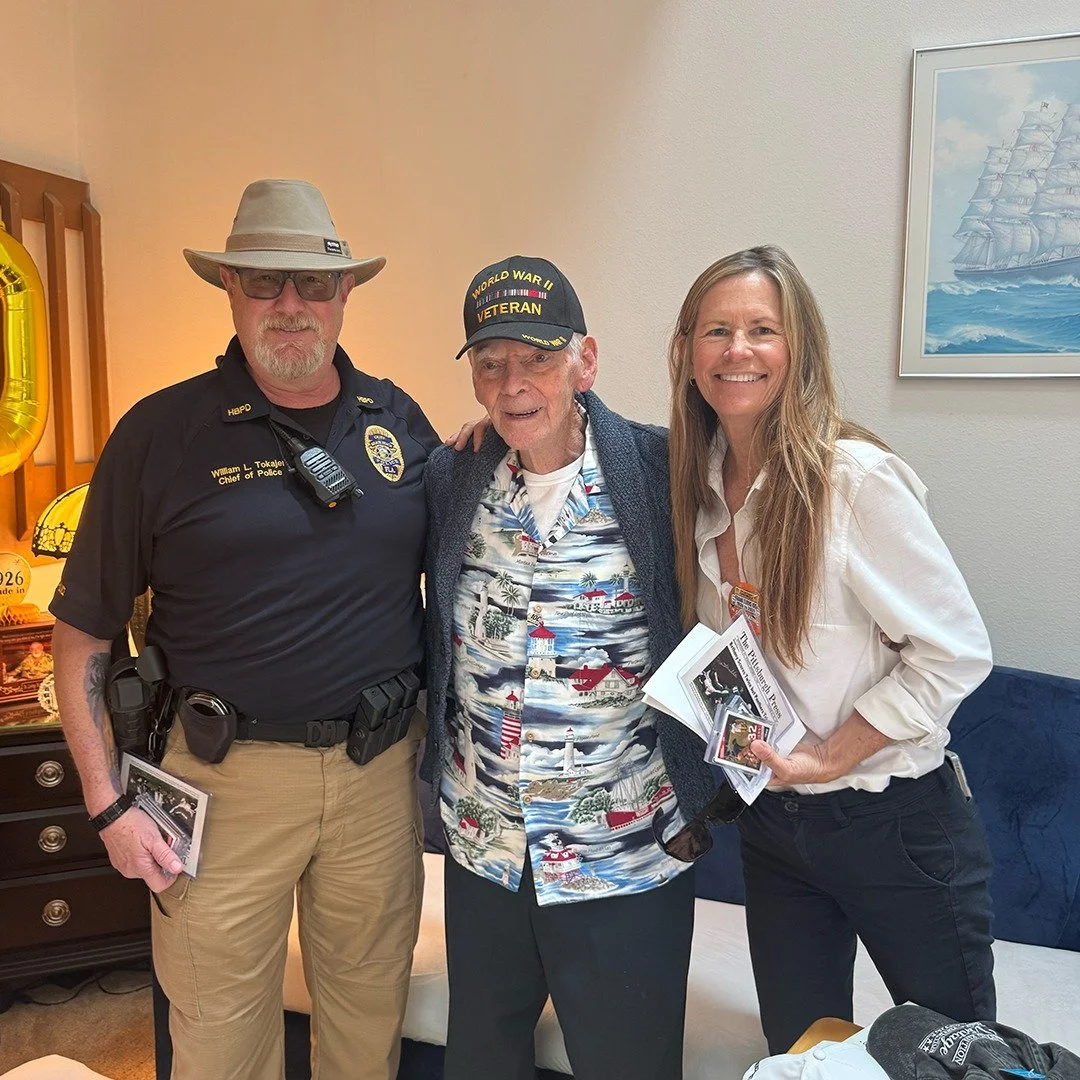
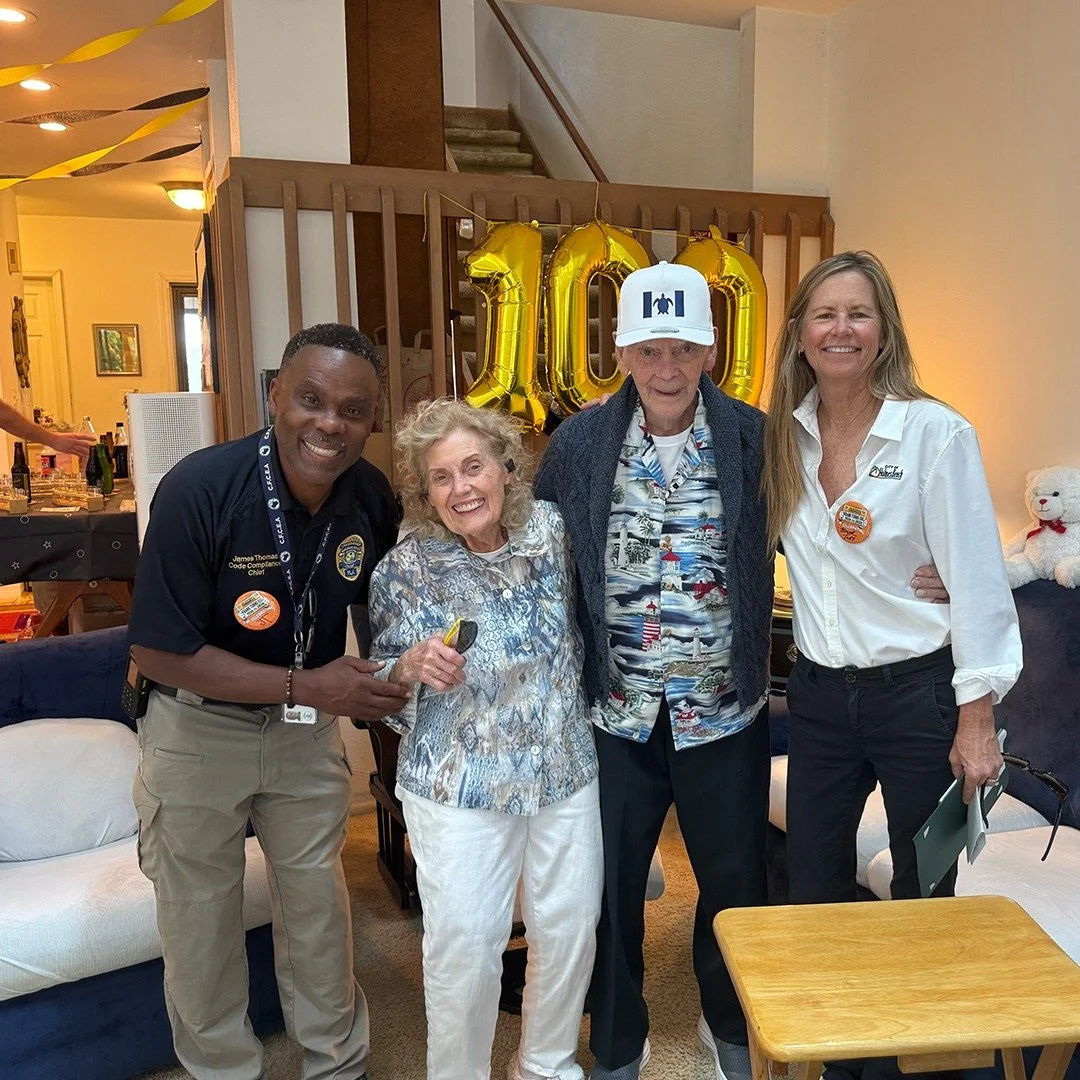
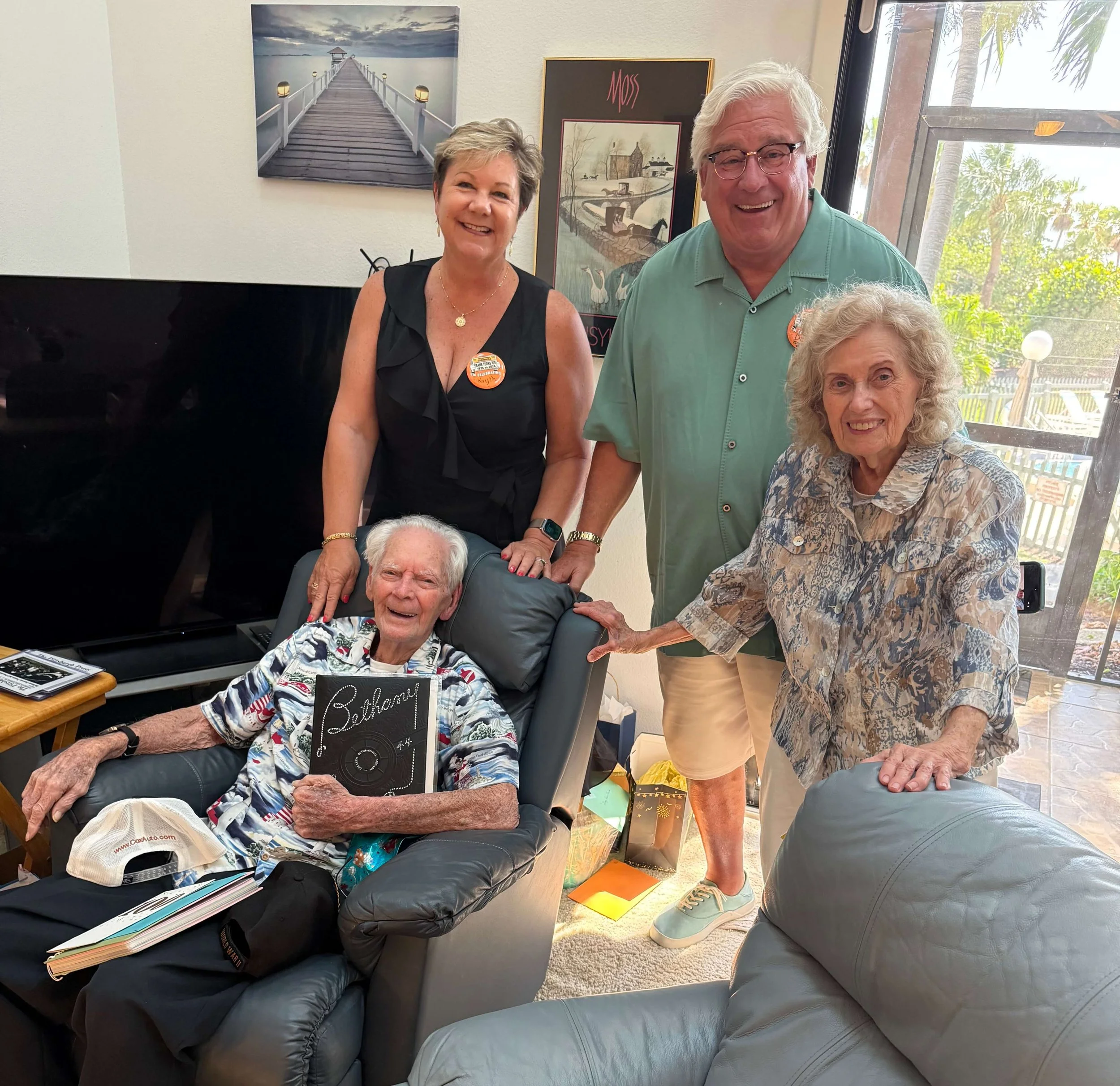
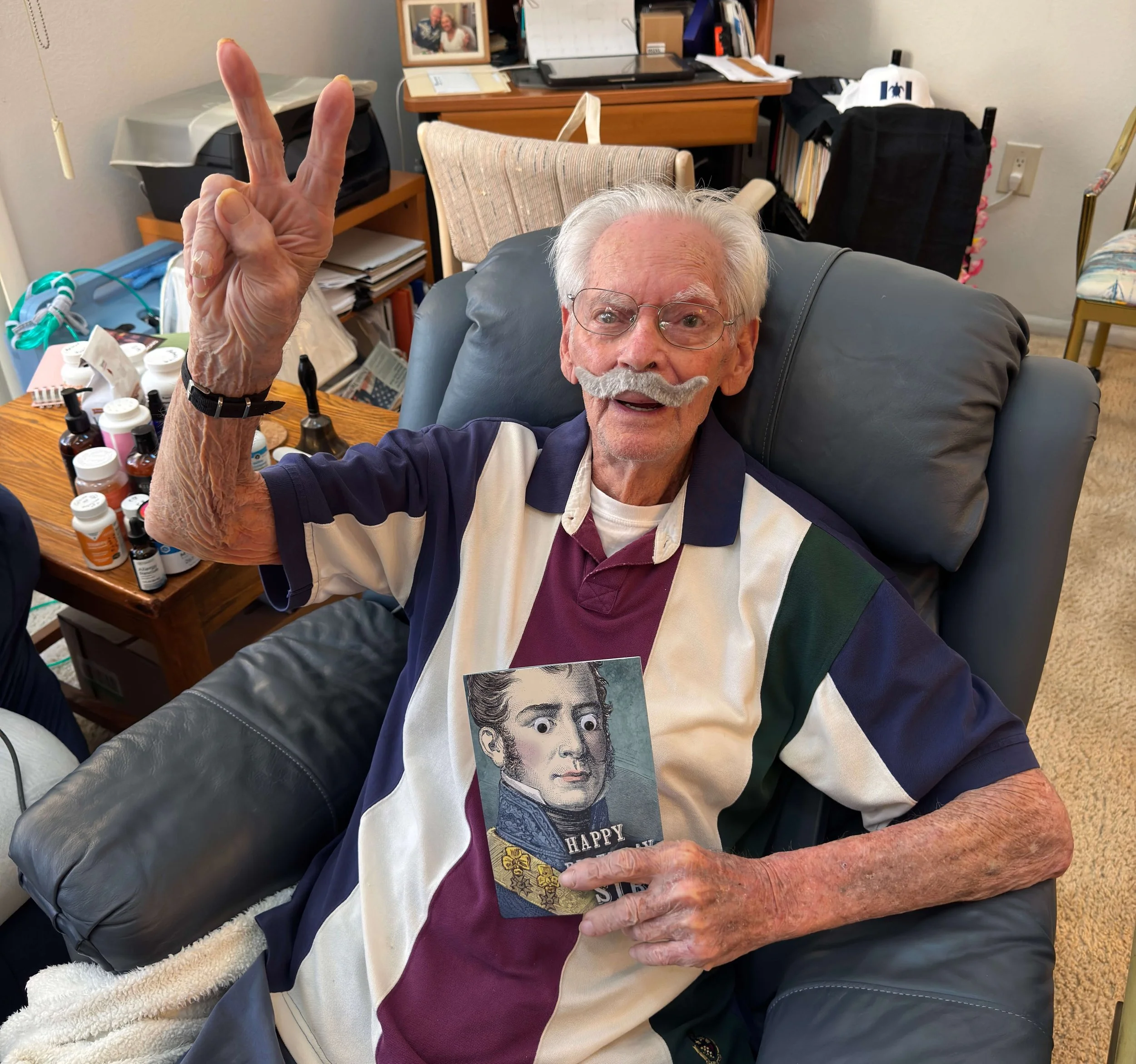
We celebrated Frank’s 100th birthday on April 27, 2026 at his home in Holmes Beach. The event was open to the public and we had many guests from a wide range of backgrounds. More photographs and commentary to follow. Click any photo below to enlarge.
Where do I send letters or gifts to Frank?
Thank you for considering being a part of Frank’s 100th Celebration. We kindly ask that you mail any letters or gifts to the address below.
Frank Madden (birthday)
4255 Gulf Drive, Unit 109
Holmes Beach, FL 34217
If you have questions feel free to reach out to Evan (727-439-1253) or Linda (727-439-6876).
Special Thanks
We would like to especially thank the following for contributing to Frank’s 100th birthday celebration in unique and amazing ways.

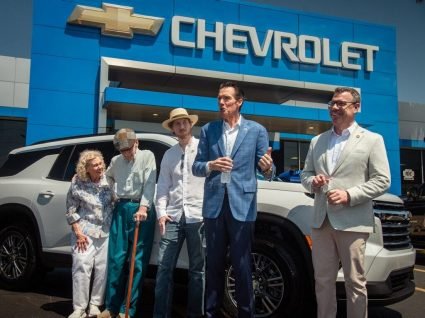
Together, Chevrolet and Cox Bradenton arranged a co‑funded a three year SUV lease on a new Chevrolet Traverse, a practical way to support Frank’s mobility and honor his decades‑long relationship with Chevy. Read more on GM News.








Photos of Frank
If you plan to include a congratulations for Frank in your publication (be it a newsletter, mailer, web blog, Facebook page, etc) please feel free to utilize any of the photos provided below, which you have our permission to republish for this occasion. Click on any photo below and then right click to download a full resolution copy.
Blurb: Dr. Frank R. Madden, EdD is about to join the “centenarian club”, the oldest club in the world, when he turns 100 years old on April 27, 2026. His life’s timeline has marched in lockstep with the nation’s history: born during America's 150th anniversary in 1926, he was in the prime of his career during the Bicentennial in 1976, and now celebrates his own centennial alongside the United States' 250th birthday. Over the course of that century, Frank has accomplished much. Growing up during the Great Depression taught him to be tough while compassionate. He would go on to serve his country during WWII, design health programs for veterans and mentally ill patients, teach at university, support local business, and survive cancer twice. Now he spends his days relaxing, listening to music, and watching football at his residence in Holmes Beach with his wife of 40 years, Margaret Louise.